Buying a Used Bus or Coach in the UK: What You Need to Know
Buying a Used Bus or Coach in the UK: What You Need to Know
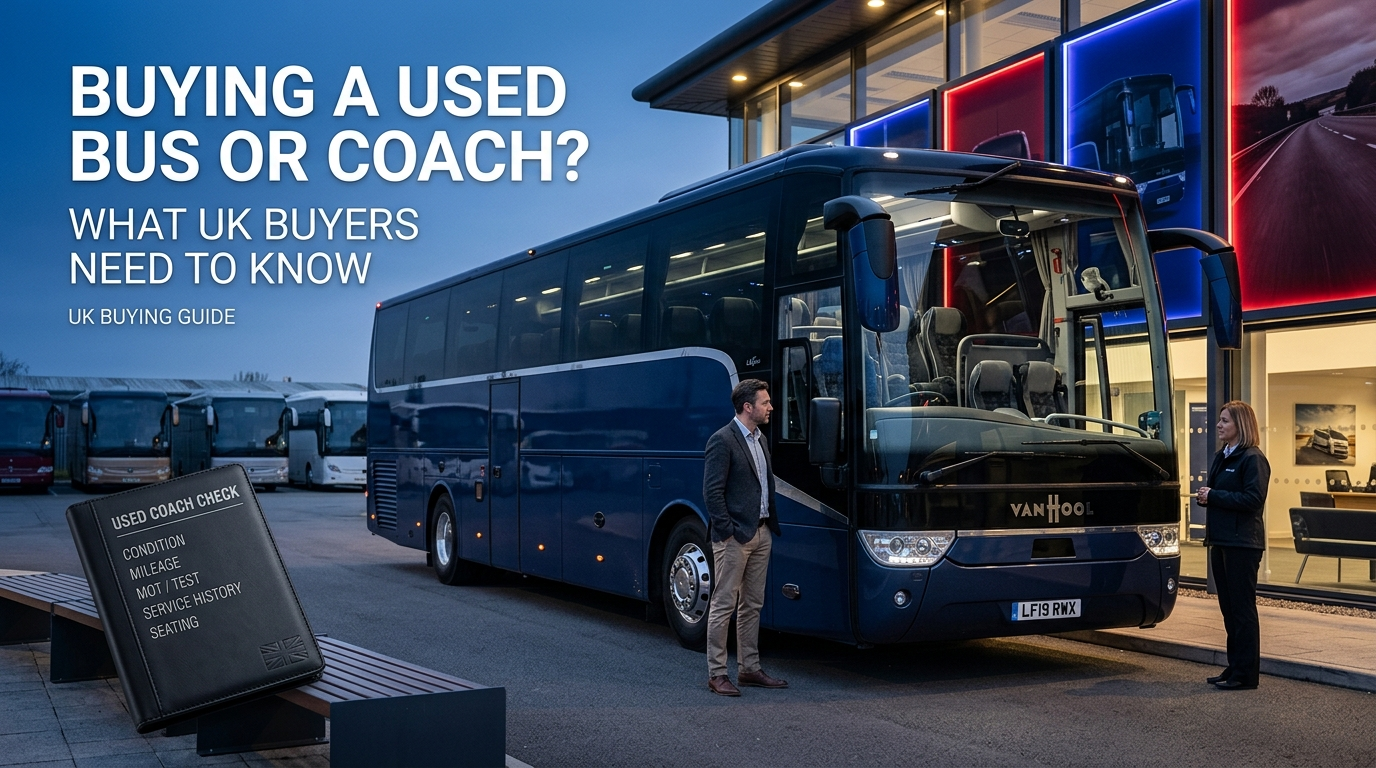
Buying a used bus or coach in the UK is not simply a bigger version of buying a used car. You need to confirm the vehicle’s seating capacity and class, check whether your drivers hold the right licence entitlement, and find out whether you need a PSV operator’s licence before the vehicle can be used for hire or reward. Once those legal questions are clear, the purchase should hinge on a physical inspection and a proper check of the vehicle’s annual test, finance and maintenance history.
This guide walks through the practical side of buying a second-hand bus, coach or minibus in the United Kingdom, from licence rules to inspection checks and running costs.
What type of vehicle do you actually need?
The words “bus”, “coach” and “minibus” are often used loosely, but they describe different vehicles with different legal and practical implications.
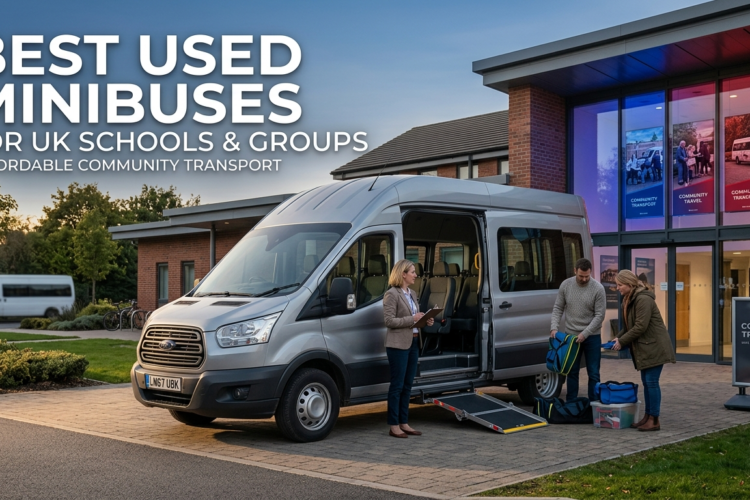
A minibus usually has between 9 and 16 passenger seats. Schools, charities, sports clubs and small shuttle operators use them. A bus typically has more than 16 passenger seats and is often designed for local or urban work, with standing space, low floors and multiple doors. A coach is also a passenger-carrying vehicle with more than 16 seats, but it is built for longer journeys, with high floors, underfloor luggage space, air suspension and reclining seats.
Before you search for a used bus or coach for sale, be clear about how the vehicle will be used. A double-decker bus might be cheap to buy, but it is not the right tool for long-distance private hire work. A coach may be comfortable on motorways but less practical for frequent stop-start town routes.
| Vehicle type | Typical seats | Common uses | Practical notes |
|---|---|---|---|
| Minibus | 9–16 | School runs, community groups, airport shuttles | Can sometimes fall under different licence and permit rules |
| Bus | 17+ | Local bus routes, school services, promotional work | Often low-floor, with standing space and frequent stop-start wear |
| Coach | 17+ | Private hire, touring, corporate travel | Built for distance, high floor, large luggage capacity |
A standard category B car licence only covers vehicles with up to eight passenger seats, so it does not cover most minibuses, buses or coaches. That single fact changes the entire buying process.
Do you need a special licence to drive it?
The licence question is often the first hurdle. If you are buying a vehicle for someone else to drive, you need to check their entitlement as carefully as your own.
For a minibus with 9–16 passenger seats, you generally need category D1 on your driving licence. Drivers who passed their car test before 1 January 1997 may have D1 with a “not for hire or reward” restriction, but that restriction prevents commercial work. If you passed after that date, you will usually need to take a separate D1 test.
For a full-size bus or coach with more than 16 passenger seats, you need category D. This is a separate vocational licence. It involves a medical, theory and practical test, and it must be renewed periodically.
There are limited exemptions for volunteer drivers and certain community groups, but they are specific. You cannot rely on a car licence simply because a minibus is small or because the journey is local. If you carry passengers for hire or reward in a vehicle with nine or more passenger seats, you will usually need a PSV operator’s licence from the Traffic Commissioner.
If you drive professionally, you will also need Driver CPC and a valid driver qualification card. This is separate from the licence itself. It applies to driving buses and coaches for hire or reward, with limited exceptions for some non-commercial uses.
Do you need an operator’s licence?
Licensing the driver is only one part of the picture. If the vehicle is used commercially, the operator usually needs a PSV operator’s licence.
A PSV operator’s licence is issued by the Traffic Commissioner for the area where the operator is based. The application involves proving professional competence, financial standing and proper maintenance arrangements. It is not something you can sort out on the day of purchase. If you buy a used coach for sale in the UK and start taking paying passengers without an operator’s licence, you risk significant enforcement action.
There are exceptions. Some community transport operations run under Section 19 or Section 22 permits, which have different conditions and are issued by bodies such as local authorities or community transport associations. These permits are not a shortcut for general commercial work. If a vehicle is currently used under a permit, check whether that permit can apply to you and your planned use before you buy.
Private use is different. If you buy a bus purely for personal use and never carry passengers for payment, the operator licensing rules may not apply. But the vehicle must still be taxed correctly, insured properly and kept roadworthy. Many private buyers underestimate the cost and effort of keeping a large PSV roadworthy even when it is not earning money.
Where should you look for a used bus or coach?
Used buses, coaches and minibuses are sold through several routes in the UK.
Specialist dealers are common. They often sell ex-fleet vehicles, school buses, tour coaches and accessible minibuses. A dealer may offer a limited warranty and may be able to provide evidence of recent maintenance, but dealer prices are usually higher than private sale prices.
Auctions are another option. Local authority auctions, fleet disposal auctions and specialist commercial auctions regularly move buses and coaches on. Auction purchases are nearly always sold as seen, and buyers usually have less time to inspect the vehicle. If you are new to this market, auctions are riskier.
Private sellers list vehicles on classified sites and specialist forums. A private sale may be cheaper, but you have far less legal protection. The old rule still applies: you have much weaker rights in a private sale than when buying from a trade seller. For more on that difference, read our guide on buying from a private sale or a dealer.
On a classifieds platform like TopSellUKCars, you can compare minibuses, buses and coaches from different sellers. The platform is a listing service, so the responsibility for checking the vehicle still sits with you. Do not assume that a listing on any site means the vehicle has been inspected or verified.
How to check the history before you buy
The history check for a bus or coach is more involved than a typical used car check. Start with the documents.
Ask for the V5C logbook and check that the seller’s name, the vehicle registration and the tax class all match. Look at the seating capacity shown on the logbook. If seats have been added or removed, the DVLA should have been notified, because the tax class and licence requirements can change.
The annual test is the heavy-vehicle equivalent of an MOT. Buses and coaches must pass an annual test through an authorised testing facility, and the test history gives you a useful picture of how the vehicle has been maintained. A bus or coach’s annual test is the heavy-vehicle equivalent of an MOT, and any gaps in that test history should be treated as a warning sign.
Maintenance records matter more on a bus or coach than on a car. A proper operator should have inspection sheets, defect logs and service records. If the seller cannot show any maintenance history, you are buying a risk, not a bargain.
For finance and theft checks, the usual HPI check is a sensible starting point. It is not always as complete for large commercial vehicles as it is for cars, but it can flag outstanding finance, theft or a recorded write-off. For higher-value coaches, you may also want a commercial asset check or written confirmation that the seller has clear title. You can read more about why these checks matter in our guide to HPI checks and UK vehicle history.
Do not skip the finance check on a used bus or coach, even if the seller seems trustworthy. A vehicle with outstanding finance can be repossessed from you after the sale.
What to look for when inspecting the vehicle
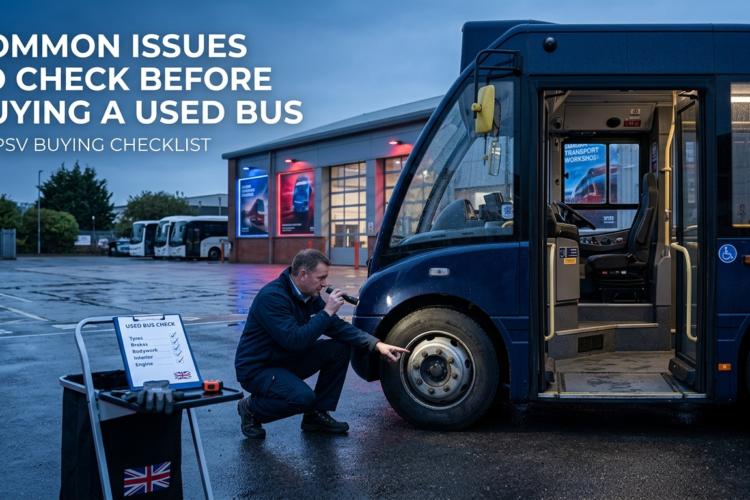
A physical inspection should be carried out by someone who understands buses, coaches or minibuses. The things that fail on these vehicles are different from the things that fail on family cars.
Pay particular attention to the bodywork, underframe, suspension and doors. Corrosion around wheel arches, step wells, roof seams and window rubbers is common. Floors can rot under wet mats, especially near wheelchair lifts and door openings. Air suspension should not drop overnight or leak excessively while parked.
Brakes are critical. Air-braked buses and coaches need time to build air pressure, and the warning systems must work. Listen for excessive air leaks, check for warning lights and ask for the most recent brake performance test results.
Doors, ramps and emergency exits must work properly. On accessible vehicles, the wheelchair lift or ramp should be tested through a full cycle. Interlocks that prevent the vehicle moving with a door open are safety-critical.
Electrics are another common source of trouble. Dashboard warning lights, destination displays, CCTV, interior lighting, USB sockets and wheelchair lift controls can all fail. A low battery can hide electrical problems, so be suspicious if a seller starts the vehicle from a booster pack before you arrive.
The engine and gearbox should be checked by someone who knows the type. Diesel buses and coaches can cover very high mileages, and mileage alone is not always a reason to walk away. Service history and oil condition matter more than a low odometer reading.
| Inspection area | What to check |
|---|---|
| Bodywork | Corrosion around arches, steps, roof seams, window seals |
| Underframe | Cracks, welded repairs, rust around suspension mounts |
| Floors | Soft spots, damp, especially near doors and wheelchair lifts |
| Air suspension | Overnight drop, compressor noise, warning lights, kneeling function |
| Brakes | Air pressure build-up, brake test results, pad and disc condition |
| Doors and ramps | Emergency exits, wheelchair lift, door interlocks |
| Electrics | Warning lights, lighting, destination display, CCTV, USB sockets |
| Interior | Seatbelt condition, seat mountings, handrails, floor coverings |
| Engine and gearbox | Service history, leaks, smoke on start, AdBlue and DPF warnings |
| Wheels and tyres | Tyre age, sidewall cracks, matching axle sets |
If you are not confident inspecting these systems yourself, pay a specialist commercial vehicle inspector or a mechanic with PSV experience. Spending a few hundred pounds on an inspection can save you from buying a coach with hidden corrosion or a bus with a failing air system.
Running costs, VED, insurance and emissions
The purchase price is only part of the cost. Running a bus or coach involves VED, insurance, maintenance and compliance costs that are far higher than for a car.
VED for buses and coaches is not calculated in the same way as car tax. The tax class depends on the vehicle’s construction, seating capacity and use. Check the current tax class on the V5C and confirm the rate with the DVLA before you commit. Do not assume that the VED figure for a used car applies to a 17-seat minibus or a full-size coach. You can find a fuller explanation of how road tax works in our article on VED for UK vehicles.
Insurance is another major cost. A bus or coach carrying passengers for hire or reward needs a specialist commercial policy. Standard motor policies will not cover it. Get quotes before buying, because the number of seats, the age of the vehicle and the operator’s experience all affect the premium.
Emissions rules are becoming more important. Older diesel buses and coaches can face daily charges in London’s ULEZ, in Scotland’s low emission zones in Glasgow, Edinburgh, Dundee and Aberdeen, and in Clean Air Zones in cities such as Birmingham, Bristol, Bradford and Portsmouth. Check the vehicle’s emissions standard before you buy. A cheap older coach can become expensive to operate if it cannot enter the areas where your passengers want to go.
If the vehicle has a tachograph, check that it is present, calibrated and appropriate for the intended use. Speed limiter requirements may also apply. These items are not optional extras when the vehicle is used in scope of drivers’ hours rules.
Paperwork and legal steps after the sale
Once you have agreed a price, the paperwork must be handled properly.
The seller should give you the V5C logbook. You and the seller should complete the appropriate sections, and the DVLA should be notified of the change of keeper. If the seating capacity or tax class is wrong on the logbook, it is better to sort that out before or immediately after the sale rather than leaving it until the vehicle is stopped at the roadside.
You will need insurance before you drive the vehicle away. If you are buying from a dealer, they may be able to arrange temporary cover or delivery, but do not rely on your existing car policy to cover a bus or coach.
If the vehicle will be used commercially, you need the operator’s licence in place before it enters service. You also need a maintenance plan that meets the requirements of the Traffic Commissioner. That means regular safety inspections, defect reporting and records that can be produced when requested.
VAT is another point to clarify. On a dealer sale, ask whether the price includes VAT. If you are VAT-registered and the vehicle is used for business, you may be able to reclaim VAT with a proper VAT invoice. Private sellers do not charge VAT.
Common mistakes to avoid
The most common mistake is buying the wrong type of vehicle for the intended use. A cheap double-decker might look appealing, but it may be unusable for the routes you want to run, expensive to insure and difficult to park or maintain.
Another mistake is ignoring the licence and operator licensing requirements until after the purchase. The vehicle may be legal to own but not legal to use in the way you planned. That can leave you with an expensive ornament rather than a working asset.
Buying without an inspection is especially risky with buses and coaches. Corrosion, brake wear and suspension faults are expensive to fix and can be dangerous. Private sales offer far less legal protection than dealer sales, so do not buy a used bus or coach privately without a professional inspection and a clear title check.
Finally, many buyers underestimate running costs. VED, insurance, maintenance, tyres, batteries, brake parts and emissions compliance all add up quickly. A used coach for sale in the UK may look cheap until you price up the first year of proper operation.
Summary
Buying a used bus, coach or minibus in the UK is about more than finding a low asking price. You need to match the vehicle to your intended use, confirm the correct driving licence entitlement, and sort out any operator’s licence or permit before the vehicle is used commercially. A thorough history check and physical inspection are non-negotiable, especially because private sales come with little legal protection.
If you get the class, licence, paperwork and inspection right, a used bus or coach can be a practical purchase for a school, community group, private hire operator or collector. If you skip those steps, you are buying someone else’s problem.