Best Used Minibuses for UK Schools and Community Groups | TopSellUKCars
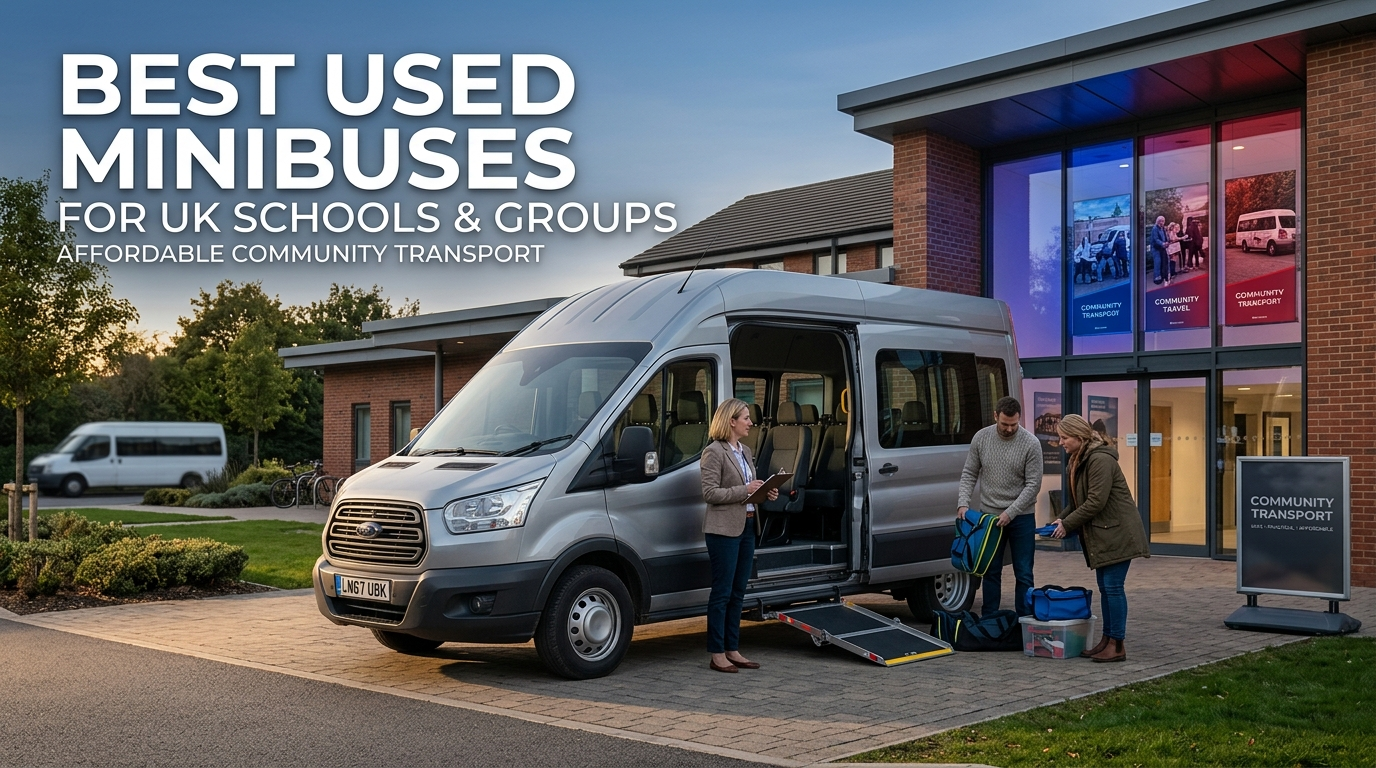
The best used minibus for most UK schools and community groups is a 12–17 seat Ford Transit, Mercedes Sprinter, or Peugeot Boxer/Citroën Relay/Fiat Ducato conversion with a clean HPI check, a documented service history, and a Euro 6 diesel engine if it will be used in a Clean Air Zone. If your drivers only hold a standard car licence, the realistic choice is an 8/9-seat vehicle such as a Ford Tourneo Custom, Volkswagen Transporter Shuttle, or Peugeot Traveller. The badge matters less than the seating capacity, wheelchair access, licence rules, and local emissions compliance.
This guide explains the models worth shortlisting, the UK licence and permit rules that catch people out, where to find a used minibus for schools UK buyers actually trust, and the checks that stop you buying a problem.
What counts as a minibus for UK driving licence purposes?
In UK law, a minibus is generally a motor vehicle with no more than 16 passenger seats plus the driver. Once you go beyond 16 passenger seats it becomes a bus or coach and falls into a different category. That distinction matters a great deal when you are buying a used minibus, because it affects who is legally allowed to drive it.
A standard UK car licence covers vehicles with up to 8 passenger seats, so it does not cover a 12–17 seat minibus unless the driver holds D1 or a valid Section 19 exemption applies. Many well-meaning school staff and community volunteers have been caught out by assuming a full car licence covers any minibus. It does not.
Standard car licence vs D1
If you passed your car test before 1 January 1997, your licence may include D1 with a not-for-hire-or-reward restriction. That often allows you to drive a minibus up to 16 passenger seats, though you should check the exact entitlement and any medical conditions with the DVLA. Drivers who passed after 1997 generally need to take a D1 test before they can drive a minibus above 8 passenger seats, unless they fall under a recognised exemption.
For many smaller groups, the simplest route is to buy an 8/9-seat vehicle that stays within the standard Category B car licence. These are typically van-derived people carriers such as the Ford Tourneo Custom, Volkswagen Transporter Shuttle, Mercedes Vito Tourer, or Peugeot Traveller. They are much easier to insure and allocate volunteer drivers, but they clearly do not work if you need to move 12 or more people regularly.
Section 19 permits and volunteer drivers
Many schools, churches, scout groups, sports clubs and community transport schemes run larger minibuses under a Section 19 permit. This allows a non-commercial organisation to operate a minibus without holding a full PSV operator’s licence, and in many cases volunteer drivers can use a standard car licence if they are at least 21, have held a full licence for two years or more, and are not paid to drive.
A Section 19 permit is issued to the organisation rather than the vehicle, usually through the Community Transport Association or your local authority. The vehicle is generally limited to 3.5 tonnes, or 4.25 tonnes if it has been adapted to carry wheelchair passengers. If your group is considering a community minibus UK use, confirm the permit conditions before you buy rather than after you have handed over the money.
School minibus or community minibus: what should you prioritise?
A school minibus and a community minibus can look identical on paper but have very different day-to-day demands. Knowing which one you are actually buying for will help you choose the right base vehicle and conversion.
School-specific checks
If you are buying a used minibus for a school, the first priority is usually reliability and safety around children. Look for a full-length roof with proper headroom, forward-facing seats with three-point seatbelts, and an emergency exit that is easy for staff to operate. A school minibus is likely to spend much of its life doing short stop-start runs around town, which is harder on clutches, brakes and diesel particulate filters than long motorway trips.
Do not assume every ex-school minibus for sale has been fastidiously maintained. Some are well looked after under council or academy transport contracts, but others have high idle hours, worn interior fittings, and patchy servicing once budgets tighten. Ask for maintenance records rather than relying on the fact that it was owned by a school.
Community group priorities
A community minibus UK group often carries adults, elderly passengers, or wheelchair users rather than children. That changes the priorities. Accessibility matters more, so a tail lift or ramp conversion with properly maintained floor tracking and restraint belts may be essential. Adult passengers also need more legroom and a more forgiving ride than children, so a high-roof Sprinter or Boxer conversion may be a better choice than a basic low-roof Transit.
Location matters too. A church group in Manchester doing urban pick-ups will need Euro 6 compliance for the Clean Air Zone, while a rural community transport group in mid-Wales may never enter a charging zone but will need a minibus that can handle steep hills and poor weather. Think about the actual route before you buy.
The best used minibus models in the UK market
There is no single best minibus for every UK school or community group, but several base vehicles dominate the used market for good reason. They are common enough that parts are cheap, garages know how to fix them, and replacement seats and components are easy to find.
Full-size 12–17 seat minibuses
These are the vehicles most people mean when they search for a used minibus. They are usually panel van conversions, with the seating installed by a specialist converter such as Stanford Coachworks, Tail Lift UK, or one of the many regional converters. When you buy, pay attention to both the base van and the quality of the conversion.
Ford Transit Minibus
The Ford Transit has been the default UK minibus for years. Almost every garage can work on one, parts are inexpensive, and converted 12, 14 and 17-seat versions are everywhere. The 2.0 TDCi and later 2.0 EcoBlue diesels are generally fine when maintained, but you need to check for rust on the sills, rear wheel arches, door steps and roof gutters. Ex-school examples with high idle hours should be priced as commercial vehicles, not low-mileage cars.
Mercedes Sprinter Minibus
The Mercedes Sprinter costs more to buy, but later examples have better corrosion resistance than older Transits and the automatic gearbox is strong. The most common issues are injector seals, suspension wear and the cost of replacement parts if the previous owner skipped servicing. If your group plans to keep the minibus for eight to ten years and can afford the maintenance, a Sprinter is often the right long-term choice.
Peugeot Boxer / Citroën Relay / Fiat Ducato Minibus
These three are essentially the same vehicle with different badges and interior trims. They are usually cheaper to buy than a Sprinter or Crafter, and the 2.2 HDi/MultiJet engine is generally tough. The trade-off is electrical quirks, rear door corrosion and occasional dashboard warning lights that need investigation. They are ideal if your budget is tight and you can accept a slightly less polished driving experience.
Renault Master / Vauxhall Movano Minibus
The Master and Movano are common in council and NHS-adjacent use, so you can find well-maintained ex-public sector examples at auction. The 2.3 dCi engine is decent, but heavily loaded examples can suffer gearbox and injector problems. Inspect these carefully and avoid anything with a rattling clutch or hesitant gear change.
Iveco Daily Minibus
The Iveco Daily is more truck-like than the others, with a harsh ride and a cramped cab, but it is strong and can be good value on rural routes. It is less common in school use, so parts and specialist knowledge are thinner on the ground.
8/9-seat minibuses and accessible carriers
These vehicles keep you on a standard car licence, which makes them much easier to run for a school or community group that relies on volunteer drivers.
Ford Tourneo Custom / Transit Custom
This drives much like a large car and is available with eight or nine seats. Ex-airport, hotel and executive examples are common, but check the DPF and clutch carefully. The rear seats can often be removed, which makes it useful for mixed passenger and equipment duties.
Volkswagen Transporter Shuttle
The Transporter Shuttle is more expensive than a Tourneo Custom, but it holds its value and has a loyal following. The 2.0 TDI is widely used, but the DSG automatic gearbox must have been serviced on schedule. Watch for corrosion on the wheel arches and sills on older examples.
Mercedes Vito Tourer / V-Class
The Vito Tourer is comfortable and refined, especially for adult passengers, but parts and servicing cost more than the Ford or VW alternatives. It is a good choice for a smaller community group that carries adults on longer journeys rather than children on short runs.
Peugeot Traveller / Citroën SpaceTourer / Toyota Proace
These three share the same platform and offer a good balance between interior space and car-like driving manners. They are not as tough as a Transit Custom when loaded, but they are easier to park and drive around town. Check the AdBlue system and front suspension before buying.
If you need a wheelchair-accessible minibus, the base vehicle matters less than the quality of the conversion. Look for a tail lift with documented servicing, working floor tracking, and a V5C logbook that correctly shows the seating capacity after the conversion was carried out.
Model comparison table
The prices below are a rough guide based on typical classified asking prices at the time of writing. Actual values vary by region, mileage, conversion quality and whether the vehicle is Euro 6 compliant.
| Model | Typical passenger seats | Licence usually required | Rough used price range | Watch for |
|---|---|---|---|---|
| Ford Transit Minibus | 12, 14 or 16 | D1 / Section 19 exemption | £8,000–£25,000 | Rust, DPF issues, high idle hours |
| Mercedes Sprinter Minibus | 14–16 | D1 / Section 19 exemption | £12,000–£30,000 | Injector seals, auto gearbox, parts cost |
| Peugeot Boxer / Citroën Relay / Fiat Ducato | 15–16 | D1 / Section 19 exemption | £7,000–£22,000 | Electrical faults, rear corrosion |
| Renault Master / Vauxhall Movano | 15–16 | D1 / Section 19 exemption | £6,000–£20,000 | Gearbox, injectors |
| Ford Tourneo Custom / Transit Custom | 8–9 | Car licence (Category B) | £10,000–£25,000 | DPF, clutch |
| VW Transporter Shuttle | 8–9 | Car licence (Category B) | £12,000–£30,000 | DSG service history, corrosion |
| Peugeot Traveller / Citroën SpaceTourer / Toyota Proace | 8–9 | Car licence (Category B) | £11,000–£27,000 | AdBlue system, front suspension |
Where to find used minibuses for sale in the UK
You have several practical options when looking for a school minibus for sale or a community minibus.
Classified listing platforms are usually the first port of call. On TopSellUKCars you can search used vehicle listings, and minibuses sometimes appear in the bus or commercial vehicle categories rather than the ordinary car section. Search terms such as “minibus”, “school minibus”, “community transport”, “17-seat minibus” and “welfare bus” can help narrow down the results.
Specialist minibus dealers are another strong option, especially those in the West Midlands, Lancashire and Yorkshire that sell ex-school, ex-council and ex-charity vehicles. Many will service and prepare the vehicle properly before sale, but that preparation is reflected in the price.
Local authority and charity disposal sales can produce genuinely affordable minibus UK examples. Councils, NHS trusts and community transport groups often replace vehicles on a set cycle and send the old ones to auction. These vehicles are usually maintained, but they can also have high mileage and may not be Euro 6 compliant. Check the listing carefully.
Online auctions such as BCA and Manheim are used heavily by trade buyers, but private individuals and community groups can also buy through them. You generally get less time to inspect the vehicle, so this route is riskier unless you know exactly what you are looking at.
If you are buying privately rather than through a dealer, the same caution applies as with any used vehicle. Read our guide on private sale vs dealer before you commit, because the legal protections are very different.
Checks before you hand over money
Minibuses lead hard lives. Even a tidy-looking example can hide structural corrosion, a worn clutch, or an illegal seating conversion. The following checks are not optional if you are spending several thousand pounds of school or charity money.
Paperwork and history checks
- Run an HPI check or equivalent before you buy any used minibus. This will tell you whether the vehicle is recorded stolen, written off, or has outstanding finance. A minibus sold by a closing playgroup can still have finance against it.
- Read the full MOT history on the GOV.UK website using the registration number. Look for repeated corrosion, structural failures, or a pattern of failing on brakes and suspension.
- Check the V5C logbook carefully. The registered keeper, chassis number, registration number, body type and seating capacity must all match the vehicle. A minibus converted after first registration may be described incorrectly.
- Use the DVLA vehicle enquiry service to check tax status, MOT expiry and recorded engine size. This is free and takes a minute.
- Ask for the service history, including cambelt or timing chain replacement, brake fluid changes, and any evidence of tail lift servicing if fitted.
For a more detailed used vehicle history walkthrough, see our article on how to check a used car’s history before buying.
Physical inspection checklist
- Walk around the vehicle and check the sills, wheel arches, door steps, roof gutters and around the windscreen for rust. Older Transits and Boxers are particularly prone to this.
- Look underneath the rear for spare wheel carrier rot and chassis corrosion.
- Open every door, including the emergency exit. Check that the seatbelt inertia reels work, the seat mountings are solid, and the floor tracking for wheelchair restraints is not damaged.
- Check the tyres. A 17-seat minibus may need commercial-rated tyres, so look for the correct load rating and check the sidewalls for cracking.
- Start the engine from cold. Look for excessive smoke, rough idling, DPF warning lights or AdBlue faults.
- Test drive it with the right mindset. A minibus with only the driver aboard will feel different to one loaded with passengers, but you can still feel clutch slip, brake vibration, steering wander and suspension noise.
- If a tail lift is fitted, cycle it fully through its range. Check that the safety interlocks work and that the lift will not operate unless the vehicle is properly prepared.
Running costs: VED, MOT, insurance and fuel
Running costs catch out first-time minibus buyers because they are not the same as running a car.
VED, or road tax, depends on the vehicle’s tax class, registration year, weight and emissions. A 9–16 seat minibus over 3.5 tonnes may not be taxed as a private car, and the difference can be significant. Before comparing two vehicles, check the current tax class and rate using the DVLA or the seller’s V5C. See our guide to road tax for used cars for more detail.
MOT testing also depends on seating capacity. Most used van-based minibuses with up to 12 passenger seats need an MOT class 4 test, while minibuses with 13 or more passenger seats need a class 5 test. The test station will class the vehicle from the seating capacity recorded on the V5C. This affects both MOT cost and where the vehicle can be tested.
Insurance for a school or community minibus must be a minibus policy. Do not assume a private car policy covers volunteer drivers or third-party use. Some insurers require drivers to be over 25, to be named on the policy, or to have completed MIDAS minibus driver training. Get this sorted before you buy, because a minibus sitting uninsured is useless to a school or community group.
Fuel economy varies widely. A 15-seat diesel minibus doing stop-start school runs may return low 20s mpg, while a 9-seat people carrier can return 35–45 mpg. For low-mileage urban use, a petrol 8/9-seat vehicle may be cheaper in the long run because it avoids DPF clogging problems.
Clean Air Zone compliance is now a major running cost issue. London ULEZ, Birmingham’s Clean Air Zone, Glasgow’s LEZ and several other UK cities require diesel vehicles to be Euro 6 or better. Buying an older Euro 5 diesel for a school inside a charging zone can be a false economy because of daily charges. Always check the zone rules for your area before buying.
How to value a used minibus
Minibus prices are less standardised than car prices because so much depends on the conversion, seating layout, accessibility equipment and the vehicle’s history. The best approach is to compare several similar listings on a classified platform and adjust for condition.
A few rules of thumb help. Minibuses hold their value reasonably well after the initial drop because there is steady demand from schools, care providers and community groups, but high-mileage commercial examples fall faster. A Euro 6 minibus is worth more inside a Clean Air Zone than an older Euro 5 van, often by more than the difference in purchase price. Recent major work such as a new clutch, cambelt, injectors or tail lift motor can justify a higher asking price, provided it is documented.
Trade advertisements often quote a price plus VAT, particularly if the minibus is being sold as a commercial vehicle. Before comparing two minibuses, ask whether the figure includes VAT or whether you need to add 20%. That single question can change the real price by thousands of pounds.
If you are buying privately, the same negotiation principles apply as with any used vehicle. See our guide on how to negotiate a used car price before you make an offer.
Final summary
The shortest honest advice is this: if your drivers hold only a standard car licence, buy an 8/9-seat Ford Tourneo Custom, Volkswagen Transporter Shuttle, or Peugeot Traveller. If you have D1 drivers or a Section 19 permit and need 14 or more seats, start with a Ford Transit minibus, then compare it against a Mercedes Sprinter or a Peugeot Boxer/Citroën Relay/Fiat Ducato depending on budget. Whatever you choose, run an HPI check, read the MOT history, confirm the seating capacity on the V5C, and check Clean Air Zone compliance before you commit.
For more practical buying and selling advice, visit the TopSellUKCars blog.