
What Is an HPI Check and Why UK Buyers Should Never Skip One
What Is an HPI Check and Why UK Buyers Should Never Skip One
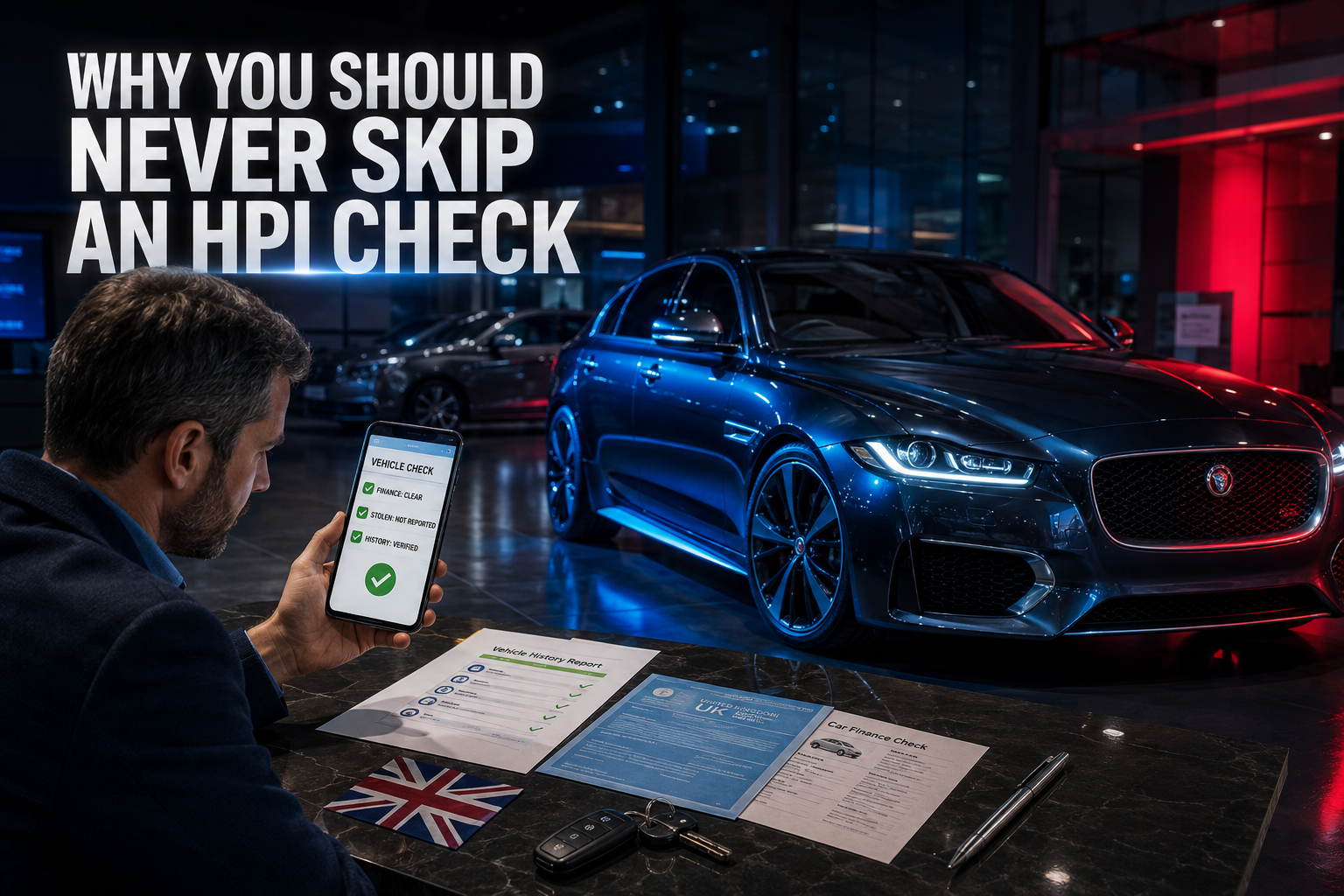
An HPI Check is a background history report on a vehicle that tells you if it has outstanding finance, has been written off, recorded stolen, or had its mileage clocked. Skipping this check is one of the most expensive mistakes you can make when buying a used car in the UK, because if you buy a car with hidden finance, the finance company can legally repossess it from you. It is the single most important piece of due diligence you can do before handing over your cash.
What Does an HPI Check Actually Show?
While people often refer to it simply as an “HPI Check”—named after the original company that pioneered the service (Hire Purchase Information)—many companies now provide these reports using data from the DVLA, the Police National Computer (PNC), and the Association of British Insurers (ABI). Regardless of who you buy the report from, a proper vehicle history check should pull together several crucial data points.
A comprehensive check will reveal:
- Outstanding finance: Whether a loan or hire purchase agreement is still active on the car.
- Stolen status: Whether the police have recorded the vehicle as stolen.
- Insurance write-off: If the car has been declared a Category A, B, S, or N total loss by an insurer.
- Mileage discrepancies: Any inconsistencies in the recorded odometer readings from MOT tests or service records (clocking).
- Number plate changes: A history of registration changes, which can sometimes indicate an attempt to hide a vehicle’s past.
- V5C (Logbook) issues: Warnings about duplicate documents or colour changes.
- Scrapped status: Whether the DVLA has been notified that the vehicle has been destroyed.
Why a “HPI Check” Is About More Than Just Finance
Most buyers think of a vehicle history check purely as a car finance check. It is true that outstanding finance is a massive risk—if the previous owner stops making payments, the finance company retains legal title to the car, not you. You could lose the vehicle and the money you paid for it.
However, there are other equally destructive financial traps that a check helps you avoid. For example, buying a car that has been previously written off but repaired improperly could be unsafe to drive. A car that has been “cloned”—where a stolen car has had a legitimate number plate from an identical vehicle attached to it—will be impounded by the police if you are stopped. An HPI check is a shield against fraud, not just a tick-box exercise.
HPI Check vs. DVLA MOT History: What’s the Difference?
There is often confusion between a free MOT history check and a full paid history check. A free check on the DVLA website will show you the vehicle’s MOT status, its mileage history, and its current road tax (VED) status. That is useful for spotting clocking and seeing how well a car has been maintained.
But the DVLA database does not tell you if the car has outstanding finance. It also does not list insurance write-offs. The DVLA’s free service is a good starting point before you travel to view a car, but it is not a substitute for a full status check.
When Should You Do a Vehicle History Check?
You should always run a full check before you agree to buy the vehicle, and ideally before you put down a deposit. If you are buying from a dealership, the dealer is legally obliged to tell you about outstanding finance or write-off status, but private sellers have no such obligation.
It is also wise to run the check again on the day you pick the car up. This closes the “gap” between the check being done and the money changing hands. A car can be reported stolen or have finance registered against it in the hours between your initial check and the handover.
Can You Trust a Seller’s “HPI Certificate”?
No, you should not rely solely on a certificate provided by the seller.
Fraudulent sellers have been known to print off a genuine check for a car, then alter the document or use a different car’s details. Alternatively, they might show you a check that was completed three months ago—before they took out a logbook loan against the vehicle. To be safe, you should always purchase the report yourself using the Vehicle Identification Number (VIN) and the registration number provided on the day of the sale. If the seller is reluctant to let you see the VIN plate or the V5C logbook, walk away.
The “Write-Off” Grey Area: Why Cat S and Cat N Matter
Even if a car has been written off and repaired, it can legally be put back on the road. An HPI check will flag this. While this doesn’t mean the car is automatically unsafe, it heavily affects its resale value.
A Category S (Structural) or Category N (Non-structural) vehicle can be a bargain if repaired properly and priced accordingly. However, you should never pay the same price for a Cat S car as you would for a car with a clean history. The report allows you to negotiate the price down based on the car’s true history. If the seller hasn’t mentioned the write-off and you find it on the report, you have caught them trying to hide something significant.
What an HPI Check Cannot Tell You
It is important to be realistic about what a check covers. It is a data check, not a mechanical inspection. A clean report does not guarantee the car is in good working order.
An HPI check will not tell you:
- If the head gasket is about to fail.
- If the gearbox is worn.
- If the car has been serviced on time (beyond the MOT pass/fail data).
- The quality of any previous cosmetic repairs.
For mechanical assurance, you should still arrange an independent inspection by a mechanic from a service like the AA or RAC, or take the car to a local garage in your area—whether you are buying in Manchester, Bristol, or Glasgow.
A Realistic Checklist for UK Buyers
To protect yourself when buying a used car, truck, bus, or bike in the UK, follow this sequence before handing over any cash:
| Step | Action | Why It Matters |
|---|---|---|
| 1. Free DVLA Check | Use the government website to check MOT history and tax status. | Spots clocking and identifies lingering mechanical failures. |
| 2. Visual Inspection | Physically check the VIN on the chassis matches the V5C logbook. | Prevents cloning and confirms the car’s identity. |
| 3. Paid History Check | Buy a comprehensive report from a reputable provider. | Uncovers finance, theft, and insurance write-offs. |
| 4. Mechanical Inspection | Hire a mechanic to inspect the vehicle. | Determines the actual condition beyond the paperwork. |
| 5. Payment | Pay via bank transfer and get a receipt. | Ensures a traceable record of the transaction. |
Is a Vehicle History Check Worth It If Buying From a Dealer?
Yes, but the risk profile is different. Under the Consumer Rights Act 2015, if you buy from a registered trader and the car is later found to have outstanding finance or to be stolen, you have legal recourse to get your money back. The dealer is legally responsible.
However, dealers have been known to miss things, especially smaller independent garages that may have taken a car in part-exchange without checking its history. Running your own check takes minutes and ensures you are aware of any issues before you drive off the forecourt. It also prevents the inconvenience of having the car repossessed first and having to fight for a refund later.
Summary: The Cost of Skipping the Check
A vehicle history check costs a fraction of what you are spending on the car. It is the difference between buying a legitimate vehicle and unknowingly taking on someone else’s debt or buying a stolen asset. The report gives you the truth about the car’s identity and legal status, allowing you to negotiate with confidence or walk away from a bad deal.
















Comments
10
[…] For a broader check on the vehicle’s financial history, you should also run an HPI check to ensure there is no outstanding finance. We cover this in detail in our guide on what an HPI check is and why UK buyers should never skip one. […]
[…] An HPI check or equivalent vehicle history check shows outstanding finance, recorded write-offs, stolen status, and mileage discrepancies. Do this before you advertise. You do not want a buyer to discover a finance marker you did not know about during the negotiation. If the check is clear, you can say so in the advert and show the certificate at viewing. If it is not clear, you need to resolve it or disclose it. For a broader explanation of what these checks cover, see our article on what an HPI check is and why UK buyers should never skip one. […]
[…] HPI check: a proper HPI check on a commercial vehicle shows outstanding finance, theft records, insurance write-off categories and mileage discrepancies. We explain what it covers in our guide to HPI checks. […]
[…] hidden accident record or a cloned number plate can become an insurance and legal problem. Our HPI check explainer and our guide to checking a used truck’s service history are useful before you […]
[…] If you want a deeper explanation of how these checks work, read our HPI check guide. […]
[…] If you are still looking for a bike, do not wait until after the purchase to think about insurance or the bike’s past. A used bike can have outstanding finance, a previous write-off, or a mileage discrepancy, and that affects both its value and how easy it is to insure. Before you hand over any money, read our guide on what an HPI check is and why UK buyers should never skip one. […]
[…] For more on what a history check covers, read what an HPI check is and why UK buyers should never skip one. […]
[…] see the most recent MOT certificate if the vehicle is over three years old, and run your own HPI check to confirm there is no outstanding finance. Do not rely on the seller’s word — a vehicle with outstanding finance can be repossessed even […]
[…] check to see if it is stolen or has outstanding finance. You can read our guide on what an HPI check is and why UK buyers should never skip one to understand exactly what this […]
[…] For a more detailed breakdown of how these checks work, read our guide on what an HPI check is and why UK buyers should never skip one. […]