How to Sell a Car With No MOT in the UK
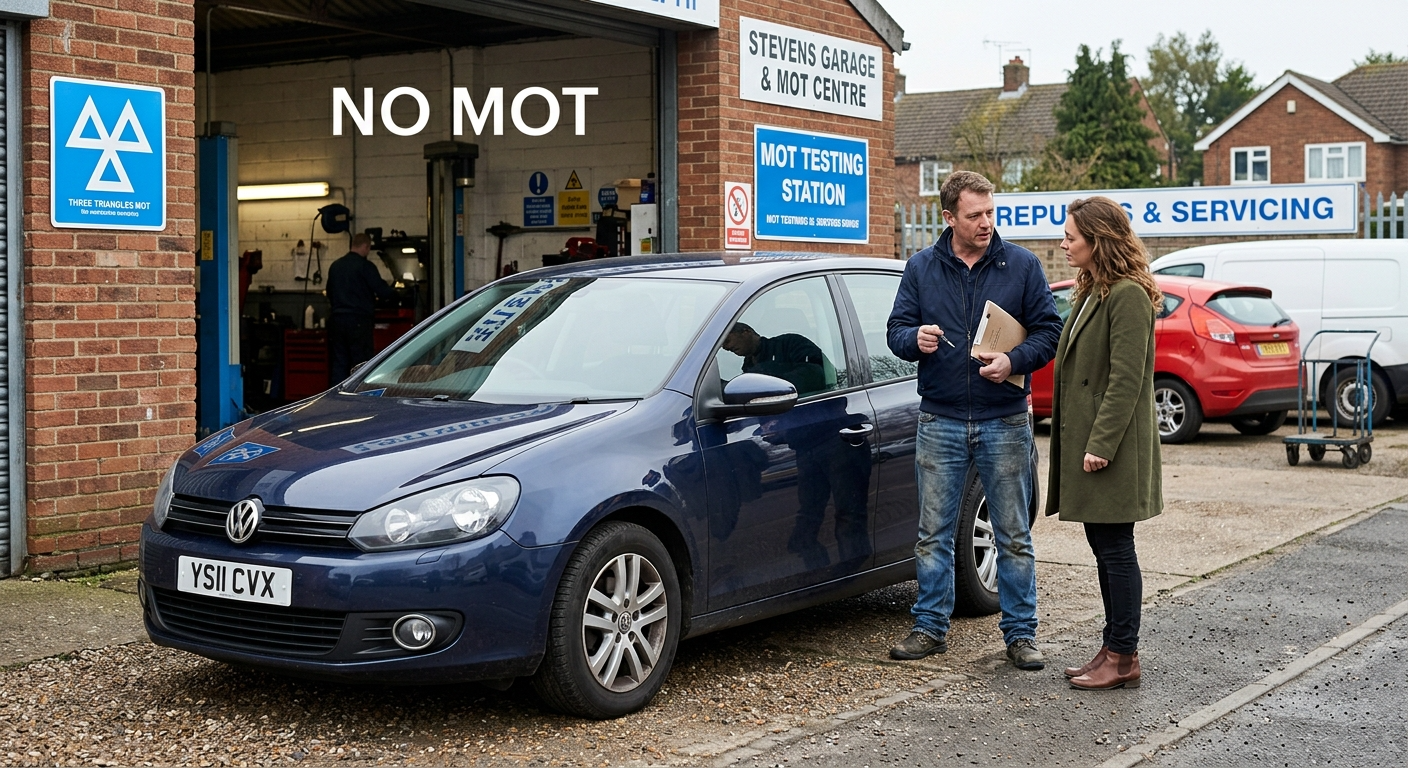
Can you sell a car with no MOT in the UK? Yes, you can legally sell a vehicle without a valid MOT certificate, but you cannot drive it on public roads to deliver it unless you are going to a pre-booked MOT test. The buyer must be fully aware that the vehicle is sold as a non-runner or without an MOT, and the responsibility for making it road-legal falls entirely on them once the V5C logbook is transferred. While it is not illegal to sell a car in this condition privately, you must be extremely careful about how the vehicle is transported and how you describe it in your advert to avoid breaking the law or being accused of misrepresentation.
However, if you own a truck or a commercial vehicle (such as an HGV, tipper, or flatbed), the rules are slightly different. For heavier vehicles, the MOT is often referred to as the Annual Test (or MOT for HGVs), and the insurance requirements are significantly more complex than standard car insurance. This guide covers both sides of the equation: the legalities of selling a vehicle with no MOT in the UK, and how truck insurance factors into the sale, collection, and ownership of a vehicle that is currently unroadworthy.
Is It Legal to Sell a Car with No MOT in the UK?
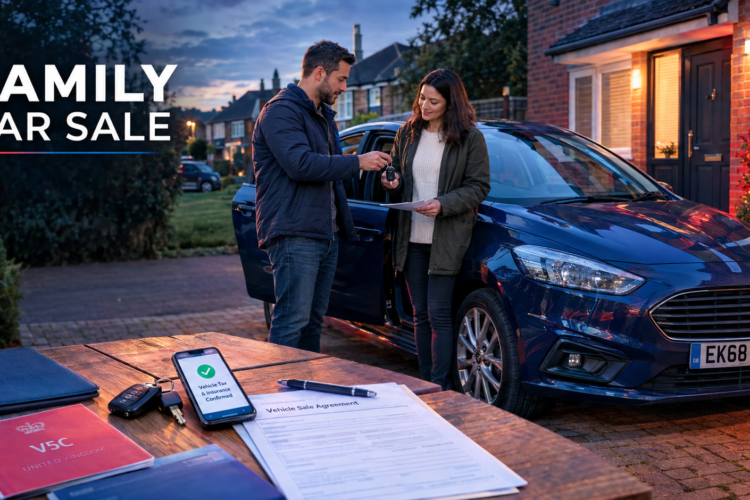
The short answer is yes, it is perfectly legal to sell a car with no MOT if it is a private sale. The DVLA does not prevent the transfer of ownership simply because the MOT has expired. You can fill out the V5C (logbook) and send off the yellow slip (V5C/3) to the DVLA just as you would with a fully roadworthy vehicle.
There is one key legal line you cannot cross: You cannot drive the car on a public road without an MOT. You also cannot allow a buyer to test drive it on a public road unless they are driving directly to a pre-booked MOT appointment. If the buyer wants to test the brakes or the clutch, they are limited to private land.
For trucks and heavy goods vehicles, the situation is stricter. If you have an HGV that has failed its annual test or the test has expired, you cannot simply let someone drive it away on trade plates to “see how it runs.” Operating a heavy goods vehicle without a valid test certificate on a public road is a serious offence that can lead to a fine of up to £2,500 for a car and significantly more for a lorry, plus penalty points on the driver’s licence.
Why Would You Sell a Vehicle Without an MOT?
There are a few honest reasons a seller might find themselves in this position, and explaining this clearly to a buyer is often the best way to secure a sale.
- The car failed its MOT on expensive corrosion or engine work. If you have a quote for £1,500 of welding on a car worth £1,000, selling it as a project or for spares makes sense.
- The vehicle is a non-runner. If the truck or car does not start, paying for an MOT is often pointless until the mechanical issue is fixed.
- You are breaking a vehicle for parts. In this case, the MOT is irrelevant because the shell will never see the road again.
- The vehicle has been sitting on a farm or in storage. Farm trucks, old Land Rovers, and imported vehicles often fall out of the MOT system while they are off the road.
How to Price a Car or Truck with No MOT
Pricing a vehicle with no MOT is difficult because you are removing the “drive it home today” factor. The market value drops sharply, usually by 30% to 50% compared to an identical model with 12 months of MOT.
Look at the scrap value and the breaker value to establish a floor price. For a standard family car, the scrap value might be £150 to £300 depending on the weight of the steel and the current metal prices. If the vehicle is a truck or HGV, the value is often higher because the components (gearboxes, axles, PTO units) are worth good money to the agricultural and haulage industries.
A practical approach is to look at the “sold” prices for similar vehicles with an MOT on platforms like TopSellUKCars or eBay, subtract the estimated cost of the repairs needed to pass an MOT, and then take off an extra £200 to £500 for the buyer’s inconvenience and risk. For example, if a 2012 Ford Transit tipper with an MOT is worth £4,000, and it needs £800 of welding to pass, a fair asking price with no MOT might be £2,500 to £2,800. This gives the buyer a potential saving if they can do the work themselves, while covering your realistic return.
How to Sell a Car with No MOT: Step-by-Step Process
Selling a car or truck without a valid MOT requires more paperwork discipline than a standard sale. Follow this sequence to protect yourself.
1. Write an Honest and Accurate Advert
Do not try to hide the lack of MOT. If you list the vehicle as “MOT expired” or “Sold as a project,” you filter out timewasters and protect yourself from claims of misrepresentation. Describe exactly why there is no MOT. If you have a failure sheet from the test centre, photograph it and include it in the listing. A buyer who can see exactly what is wrong is far more likely to make an offer than one who suspects you are hiding a rotten chassis.
2. Sort Out the Logbook (V5C) Beforehand
Have the V5C ready. If you have lost it, you can apply for a replacement from the DVLA for a small fee (currently £25). Do not agree to sell the vehicle without a logbook unless the buyer is a registered breaker with a full receipt system, as this delays the transfer and leaves you potentially liable for fines.
3. Decide on the Collection Method
This is the part that catches sellers out. If the vehicle has no MOT, the buyer cannot drive it away on the public highway. The three legal ways to move it are:
- Trailer or Recovery Truck: The buyer brings a trailer or a flatbed truck. This is the most common method for cars and light trucks.
- Pre-Booked MOT Test: The buyer insures the vehicle (usually on a temporary or specialist policy) and drives it directly to a pre-booked MOT appointment. They must have the booking confirmation with them. If they get pulled over, they must prove they are going to the test centre. If it fails, they cannot drive it home.
- Trade Plates: Only applicable if the buyer is a registered motor trader. Private buyers cannot use trade plates to move a vehicle with no MOT.
For heavy trucks, you will almost certainly need a specialist heavy haulage recovery firm or a low-loader. The cost of moving a 7.5-tonne lorry from Manchester to Leeds without an MOT can easily run to £400-£600, so factor this into your negotiation.
4. Insist on a Written Receipt
Write a receipt that includes the vehicle registration number (number plate), the make and model, the sale price, the date, and the words “Sold as seen, no MOT, no warranty given or implied.” Both of you sign it and keep a copy. This is your best defence if the buyer comes back three weeks later claiming the engine has blown up.
5. Notify the DVLA Immediately
Go online to the DVLA’s “Sold a vehicle” service and transfer the vehicle to the new keeper. You will need the 11-digit document reference number from the V5C. If the buyer is a scrap dealer taking it for destruction, you should instead complete the “Scrap a vehicle” process. Never let a buyer take a car with no MOT without doing this transfer there and then.
What About Truck Insurance When There Is No MOT?
If you are selling a truck, HGV, or commercial vehicle with no MOT, the insurance situation is different from a car. Standard motor insurance policies usually contain a clause stating that the vehicle must be maintained in a roadworthy condition and, where required, hold a valid MOT certificate. If you cancel your truck insurance policy after the MOT expires, the vehicle is completely uninsured, which is fine if it is parked on private land (and is declared SORN if not insured). However, if you want to move it, or if the buyer wants to collect it under its own power, you need specialist cover.
Most standard truck insurance policies will not cover a vehicle being driven to an MOT test if the test is overdue. In this case, you or the buyer need a “Trade Plate” policy or a specialist motor trade insurance policy. These policies cover vehicles that are not currently taxed, tested, or registered to the driver. If you are a private individual, you can sometimes ask your insurance broker for a “garage” or “recovery” extension, but this is rare. For most sellers, the advice is simple: do not attempt to drive the truck to the buyer. Insist on collection via a low-loader.
Is It Worth Putting the Car Through an MOT Before Selling?
Often, the answer is yes, even if the car has minor issues. A fresh MOT certificate is a powerful selling tool. It removes the buyer’s biggest fear (the unknown) and allows them to drive the car away legally. If the car needs less than £200 of work to pass, you will almost always recoup that cost and more in the final sale price. A car with 12 months of MOT is simply a more valuable asset. We cover this in more depth in our guide on what car buyers need to know about MOTs.
However, if you know the car will fail on a structural issue (such as a rotten sill or a cracked chassis on a truck), paying for an MOT test just to get a fail sheet can be a waste of money. You can usually diagnose these issues yourself or pay a local mechanic for a pre-MOT inspection, which is cheaper than the test itself.
Common Mistakes Sellers Make with No-MOT Vehicles
One of the biggest mistakes is leaving the vehicle insured when it has no MOT. If the vehicle is stolen or catches fire while parked on your drive with no MOT, your insurer may reject the claim on the grounds that the vehicle was not roadworthy and you failed to disclose that the MOT had lapsed. If you are not going to re-test it, cancel the policy and apply for a SORN to stop paying Vehicle Excise Duty (VED/road tax). This is especially important for trucks, where the VED can be hundreds of pounds a year.
Another common mistake is allowing a buyer to “borrow” the vehicle to take it for an MOT test before paying. If they crash it on the way to the test centre, you are left with a damaged, uninsured vehicle and no buyer. Always take full payment before the vehicle leaves your property, regardless of where they say they are driving it.
How Does This Differ for Buses and Coaches?
If you are selling a bus or coach with no MOT (Annual Test for PCVs), the process is similar to trucks, but the pool of buyers is smaller. Most private individuals cannot legally drive a bus on a car licence, so your buyer will almost certainly be a dealer, a rally enthusiast, or an exporter. Buses are frequently sold without a valid test because they are being purchased for conversion into motorhomes or catering units. In these cases, the lack of an MOT is expected and is reflected in the price. You should still follow the same documentation steps, and you should be aware that moving a 12-metre coach requires a specialist operator with an O-licence.
Selling a Car with No MOT vs Selling for Scrap
If the car has no MOT and is worth less than £500, you might be better off selling it to a scrap yard or an Authorised Treatment Facility (ATF). The rules here are strict: you must use an ATF, you must hand over the V5C, and you should be paid by bank transfer or cheque (cash for scrap was banned years ago). The DVLA will be notified by the ATF, and you will receive a Certificate of Destruction. This is a cleaner process than selling privately to a stranger who may never register the car in their name.
For trucks, scrapping is often more profitable due to the weight of the metal. A 7.5-tonne lorry can weigh over 3 tonnes empty, which translates to a decent scrap payout even before you sell the engine or gearbox separately.
Your Responsibilities After the Sale
Once the vehicle is gone, keep the receipt and any photos of the buyer’s ID. If the buyer fails to tax or SORN the vehicle, you might receive a letter from the DVLA. If you completed the online transfer of ownership, you are protected. If you did not, you will have to prove you sold it, which is why the receipt is so important. We talk about the other documents you need in our guide to selling a used car privately in the UK.
How to Buy a Car with No MOT (If You Are the Buyer)
If you are on the other side of the table, buying a car with no MOT can be a great way to get a bargain, but you need to go in with your eyes open. Never buy a vehicle with no MOT without seeing it in person. Look at the failure sheet if there is one. Check the vehicle’s history using an HPI check to ensure it is not recorded as an insurance write-off or stolen. If you are looking at a truck, make sure the chassis number matches the V5C, as commercial vehicles are more prone to “ringing” (identity theft) than cars. Once you buy it, you will need to arrange transport, and you cannot leave it parked on a public road without an MOT or insurance.
Conclusion
Selling a car with no MOT is a straightforward legal process as long as you are honest in your listing, complete the V5C transfer correctly, and do not allow the vehicle to be driven away illegally. For trucks and commercial vehicles, the process is the same in principle but the logistics of moving the vehicle are heavier, and the insurance implications are more serious. If you are unsure, it is often worth paying for an MOT test just to get a documented failure list, which often helps you sell the vehicle faster than a vague “needs work” advert. List your no-MOT vehicle on TopSellUKCars with clear photos and an honest description, and you will attract the right kind of buyer: one who knows exactly what they are getting into.
Internal Links used: