How to Value Your Car Before Selling It in the UK: A Practical Guide
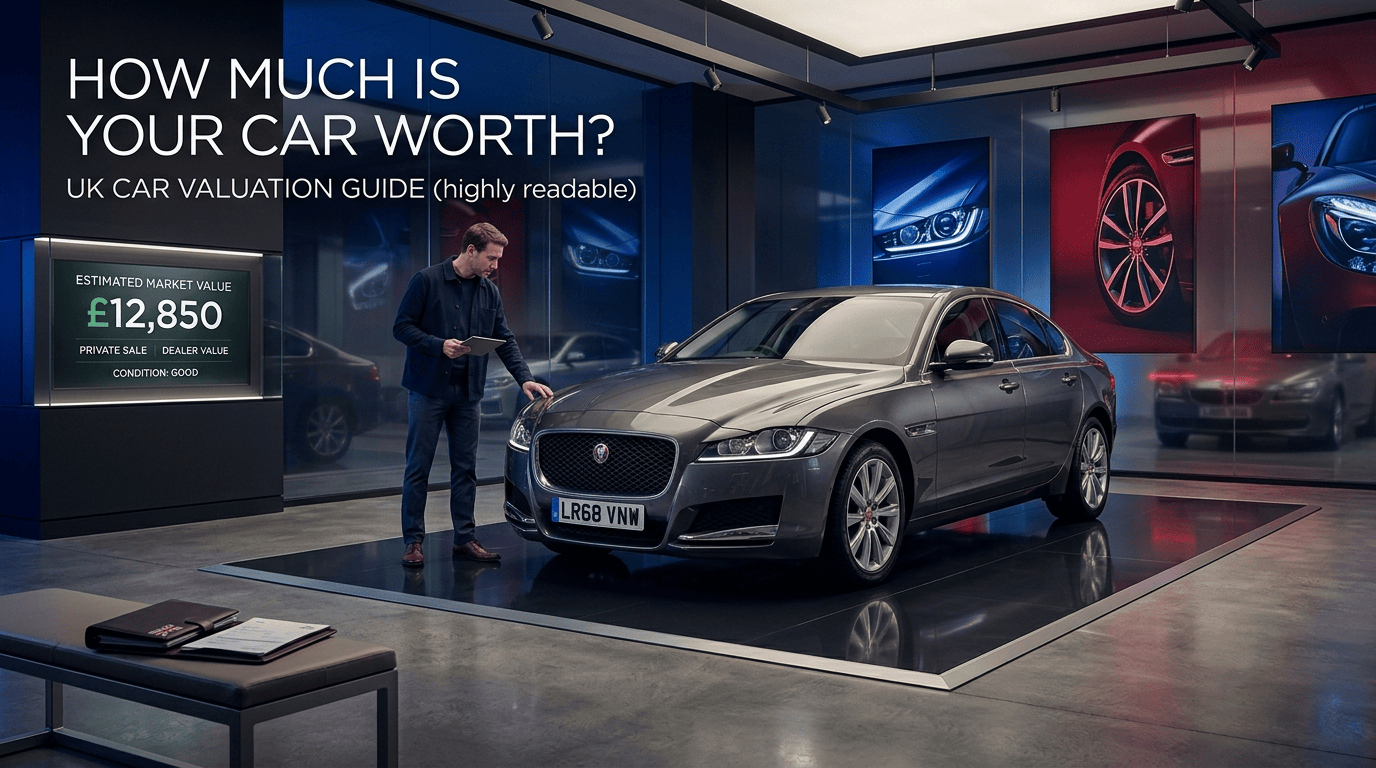
Getting an accurate valuation for your car in the UK is about understanding the difference between what you hope it’s worth and what the current retail market will actually pay. The most reliable method is to cross-reference a free online valuation tool (like those from Auto Trader or CAP) with live prices of similar cars currently advertised for sale near you. You then adjust that baseline figure based on your specific vehicle’s service history, current MOT length, and physical condition.
What’s the Difference Between Trade, Private, and Retail Value?
When you run a valuation, you will often see three different figures. It is vital you understand which one applies to your situation, otherwise you risk pricing the car incorrectly from day one.
The trade value (sometimes called the wholesale or auction value) is the amount a dealer would expect to pay to buy your car outright. This is the lowest figure. It is not what you should expect to achieve in a private sale unless you are desperate for a quick transaction or the car has issues you want to pass on quickly.
The private sale value is the benchmark for selling to another individual on a classifieds site like TopSellUKCars or a local marketplace. This figure sits between trade and retail. It reflects a fair price for both parties where the buyer takes on a bit more risk than buying from a garage (e.g., no warranty) but pays less than forecourt price.
The retail value (or forecourt price) is what a dealer will stick in the windscreen after they have bought the car, serviced it, valeted it, and applied their 6-12 month warranty obligations under the Consumer Rights Act 2015. You cannot charge retail price for a private sale because you are not offering those same legal protections.
Which Factors Actually Move the Price? (The UK Checklist)
Valuation algorithms look at data, but as a seller, you need to know why the algorithm spits out a number. These are the core variables that move your car’s value up or down in the UK market.
1. Mileage vs. Age
In the UK, the average annual mileage is roughly 8,000 to 10,000 miles. A car that has covered significantly less than this will usually command a premium, but only if the condition matches the low mileage. A 10-year-old car with 20,000 miles on the clock might actually raise suspicion if it lacks a full service history showing annual oil changes, as low mileage on an old car can lead to perished rubber and DPF issues on diesels.
2. The MOT Length
This is a big one for private buyers. A car with a full 12-month MOT is infinitely more attractive than one with 6 weeks left. If your car is close to running out, the buyer will factor in the cost and hassle of getting a new test. Spending £40 to £50 on a fresh MOT before you list the car can often add £200 to £300 to the final selling price in the eyes of a nervous buyer.
3. ULEZ and Clean Air Zones (CAZ)
This is a uniquely British consideration that has massively impacted values, particularly in Greater London, Birmingham, Bristol, and Manchester. If your diesel car is not Euro 6 compliant, or your petrol is not Euro 4 compliant, you are selling a car that will cost the next owner £12.50 a day to drive in many city centres. This has caused the value of non-compliant older cars to plummet in the South East, while they still hold value in rural Scotland or Wales where these zones do not exist.
4. Service History (The Stamps)
A full service history (FSH) adds value. It proves the oil was changed and the car was maintained. A car with a patchy history or no history at all will fall to the bottom of the price bracket. In the UK, a stamp from a reputable independent specialist is just as valuable to a buyer as a main dealer stamp, provided the correct parts were used.
How to Use Free Car Valuation Tools Correctly
When you search for “free car valuation UK,” you will find tools from Auto Trader, WeBuyAnyCar, Motorway, and the big classifieds sites. These tools are powered by data aggregators like Cap HPI or Glass’s Guide.
To use them effectively, do not just use one. Run your registration number through three different tools and take the average. Here is why:
- WeBuyAnyCar will often show a low figure. That is because they are a trade buyer; their quote is the “cash today” price, not the private sale price.
- Auto Trader valuation will give you a private sale range. It is usually quite accurate but leans slightly high if you are in a sparse rural area.
- Motorway gives a price that dealers are currently bidding at auction. This is a good reflection of the current trade sentiment.
Once you have an average private sale figure, you need to ground that number in reality.
The Classifieds Reality Check
Go to TopSellUKCars, Auto Trader, or Gumtree. Filter by your exact model, engine size, gearbox type, and a mileage bracket of plus or minus 10,000 miles. Look at the prices.
Notice the difference between the asking price and the selling price. Cars that have been listed for longer than 30 days are usually overpriced. You want to see what has sold recently, but since you cannot see that data easily, look at the cars with “SOLD” markers or simply the median price of cars that look clean. If a dealer is advertising a similar car for £8,000, you should not list yours for £7,995. A private buyer expects to pay less than dealer forecourt price; you should likely be around the £7,200 to £7,500 mark depending on spec.
How to Assess Your Car’s Condition Honestly
This is where sellers lose money. They overestimate the condition because they are emotionally attached to the vehicle. A valuation tool assumes your car is in “Good” condition, which is defined by the industry as having no mechanical faults, a clean interior, and only minor wear and tear consistent with age.
Here is a quick cheat sheet to grade your car:
| Condition Grade | Description (UK Standard) | Impact on Price |
|---|---|---|
| Excellent | Almost showroom condition. No dents, no scratches, unmarked alloys, recent premium tyres, full dealer history. | Top of the price bracket. |
| Good | The average car. Some light stone chips on the bonnet, maybe a small scratch, wheels have minor kerb rash. No warning lights on the dash. | The baseline valuation figure. |
| Fair | Visible wear. Requires a new tyre or brake pads soon. Interior has stains or smells. History is partial. | 10-15% below baseline. |
| Poor | Mechanical faults, warning lights (EML, ABS), body damage requiring paint, torn seats. | Trade value only. |
Be ruthless. If there is a warning light on the dashboard, a buyer will assume the worst. Getting a diagnostic check at a local garage for £50 and fixing a cheap sensor can often recover hundreds of pounds in lost value.
The “Provenance” Paperwork: Why the V5C and HPI Matter
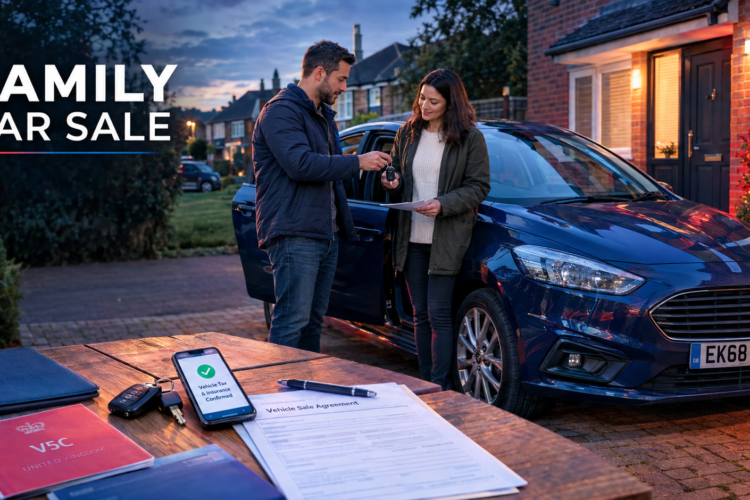
In the UK, the vehicle’s legal identity is governed by the Driver and Vehicle Licensing Agency (DVLA). The V5C logbook is not proof of ownership (the DVLA explicitly states this on the document), but it is proof of who the registered keeper is.
A buyer will want to see the V5C. If your name is not on it, or if the address is wrong, it raises red flags. Update your V5C online via the DVLA portal before you sell—it is free and takes minutes.
Furthermore, running an HPI Check is not just for buyers. Savvy sellers run one on their own car before listing. It costs about £15-£20. If there is outstanding finance (a logbook loan or PCP agreement) and you try to sell the car, you are legally selling a car you do not own—the finance company owns it. Clearing the finance first is the only way to sell it properly. Showing a clean HPI certificate to a buyer immediately validates your asking price and builds trust.
What About Road Tax (VED)?
Road tax, officially known as Vehicle Excise Duty (VED), is no longer transferable when you sell a car in the UK. This changed in 2014. When you sell the vehicle, you must notify the DVLA, and you will automatically receive a refund for any full months remaining on the tax. The buyer must tax the car themselves before driving it away.
This means the “taxed until next year” sales pitch no longer applies. Do not try to charge extra for “road tax included”—it is illegal and a sign that the seller does not understand current UK regulations. However, mentioning that the car is in a low VED band (for example, zero or £35 a year) is a legitimate selling point.
Common Mistakes That Inflate Your Valuation (and Slow the Sale)
If you want to value the car correctly, you have to avoid the “modification trap.” Sellers often believe that modifications add value. In the UK mainstream market, they usually do the opposite.
- Aftermarket exhausts and air filters: Annoying to neighbours, usually classified as a “modification” by insurance companies, which pushes the buyer’s premium up. Reduces value.
- Big alloy wheels: If they are not factory-fit or manufacturer-approved, they reduce ride quality and scare off families. Reduces value.
- Tinted windows: Illegal tints on the front windows (under 70% light transmission) will fail an MOT. Reduces value.
- Worn premium tyres vs. new budgets: A car with four mismatched budget tyres suggests the owner scrimped on maintenance. A matching set of quality tyres (Michelin, Goodyear, Pirelli) adds confidence.
How to Value Specific Vehicle Types (Cars, Vans, Bikes)
While the principles are the same, the market dynamics differ on TopSellUKCars depending on the vehicle class.
Cars: The most liquid market. Your main competition is massive. Color matters in the UK—silver, black, and grey sell fastest; bright yellow or green sits for months.
Vans (Trucks/Light Commercials): For vans (Ford Transit, VW Transporter), the value is almost entirely based on payload, roof height, and MOT history. A rusty van with a valid MOT is worth more to a builder than a clean van without one. Mileage matters less on vans if maintenance is proven.
Bikes (Motorcycles): Seasonality rules. Trying to sell a superbike in November in Manchester will achieve a significantly lower price than selling it in April. Condition of the chain and sprockets, plus service history (valve clearances), is key.
Buses/Coaches: This is a PSV (Public Service Vehicle) market. Value is calculated on remaining seat capacity, DDA (Disability Discrimination Act) compliance, and the remaining life of the engine. This is a purely trade-to-trade valuation, usually requiring an engineer’s report.
The “Quick Sale” Calculation
If you do not want to wait for a private buyer, you are looking for a trade sale. This is where you sell to a dealer or use a “sell my car” service.
To calculate what you can expect from a trade buyer, take the average private sale price and deduct 20% to 25%. This covers the dealer’s profit margin and the cost of them preparing the car. If a dealer offers you that figure, it is a fair offer for a zero-hassle sale.
Final Summary
Valuing your car in the UK is a process of triangulation: you need the data from the algorithms, the evidence from the live market, and the brutal honesty of a physical inspection. If you ignore the market data, you won’t get calls. If you ignore the condition, you’ll get calls but no buyers. Price the car correctly on day one, present it with a fresh MOT and a clean HPI, and you will sell it for what it is actually worth.
Looking for a benchmark? Browse the current listings on our Cars category to see what similar vehicles are priced at today.