
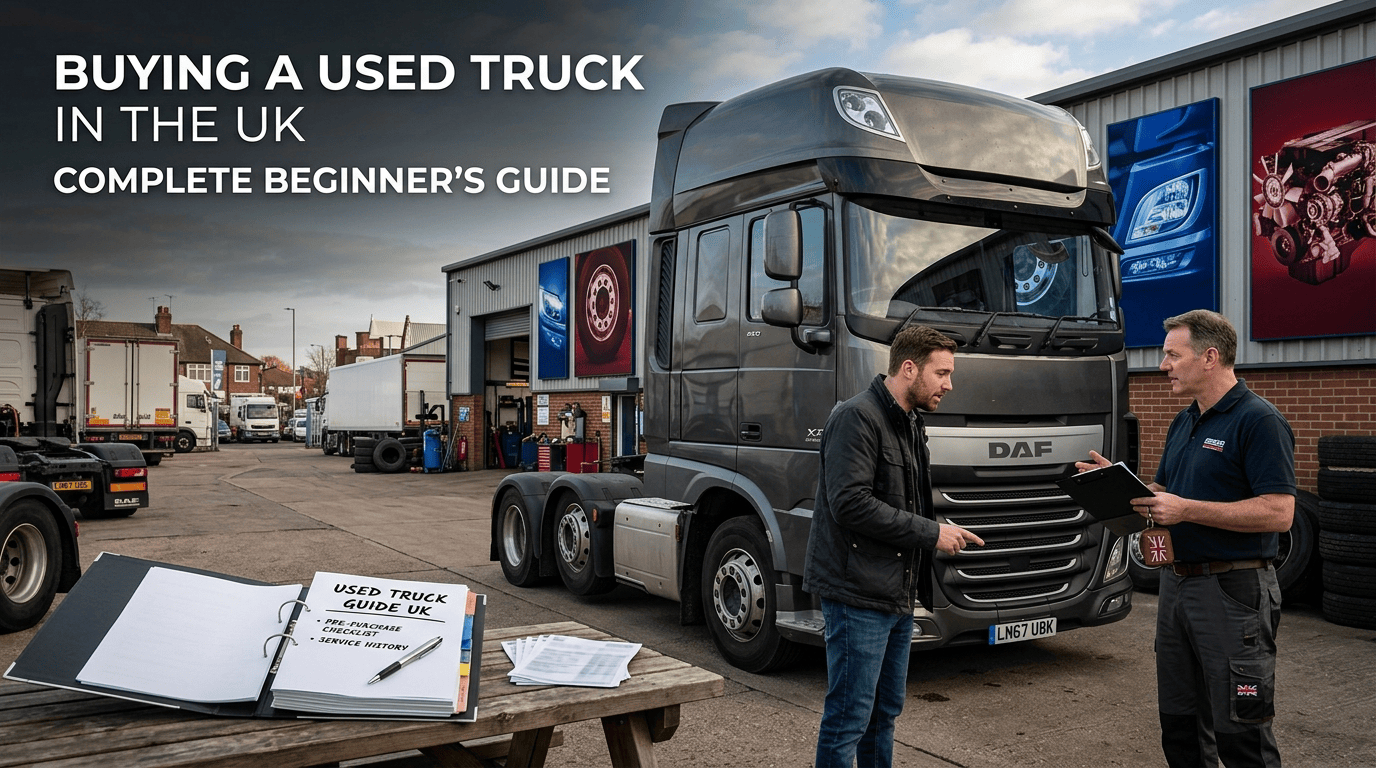
Buying a Used Truck in the UK: Complete Beginner’s Guide
Buying a used commercial vehicle is rarely as simple as walking onto a forecourt and pointing at the shiniest cab. Whether you are a sole trader upgrading from a battered Transit, a haulage firm adding a second 44-tonne unit to the fleet, or a groundworks company after a tipper, the process is fundamentally different from buying a car. You are not just buying transport; you are buying a tool that needs to earn its keep.
The most direct answer to how to buy a used truck in the UK is this: first define exactly what weight and body type you legally need, then verify the chassis history and mechanical condition rigorously, and finally budget for the total cost of ownership—including VED, insurance, and maintenance—rather than just the screen price.
Define What the Truck Actually Needs to Do
Before looking at a single listing on TopSellUKCars, you need to stop thinking in terms of brands and start thinking in terms of specification. The biggest mistake first-time buyers make is buying too much truck or, far worse, buying one that is not legally plated for the job.
What Gross Vehicle Weight (GVW) Do You Need?
The weight class dictates your driving licence requirements and the operational rules you must follow.
A standard car licence (Category B) only covers vehicles up to 3.5 tonnes Gross Vehicle Weight (GVW). If you passed your test after 1997, you cannot simply hop into a 7.5-tonne truck without taking an additional test.
You need to look at the plating certificate—often called the ministry plate—which is usually riveted inside the cab or under the bonnet. This tells you the maximum legal weight the vehicle can run at, not what it weighs empty.
Here is a realistic breakdown of what different weights mean for UK operators:
| GVW Class | Common Examples | Licence Required | Operational Notes |
|---|---|---|---|
| 3.5t (3,500kg) | Ford Transit, Mercedes Sprinter, VW Crafter | Category B (Car) | No tachograph needed for own-goods use. Standard MOT class (Class 4 or 7). |
| 7.5t (7,500kg) | DAF LF, Iveco Eurocargo, 18-tonne downplated | Category C1 | Requires Driver CPC if driving for hire/reward. Needs an HGV MOT (Class 4/5). |
| 18t (18,000kg) | Rigid bodies, skip loaders, box trucks | Category C (Class 2) | Operator licensing (O-licence) usually required. Tachograph mandatory. |
| 44t (44,000kg) | Articulated tractor units (tractor + trailer) | Category C+E (Class 1) | Full O-licence, rigorous maintenance inspections, and Driver CPC required. |
Body Type: Rigid vs. Tractor Unit vs. Tipper
The chassis is the expensive part; the body is the working part. When buying used, you should be very clear on what body you need, because retrofitting a different body is costly and often eats up any savings you made on the purchase price.
- Box Trucks (Dry Freight): Look for a flat floor, a solid rear door mechanism, and no tears in the roof. Water ingress kills box vans.
- Tippers: Check the condition of the hydraulic rams. They should lift smoothly under load without juddering. Inspect the chassis rails for cracks near the tipping hinge.
- Tractor Units: The fifth wheel coupling needs to be checked for wear. The mileage will be high; that is normal, but the service history must be meticulous.
- Crew Cabs: If you are carrying a team to site, ensure the bodybuilder conversion was done properly. Look for rust where the body meets the chassis.
A Step-by-Step Process for Buying a Used Truck
Walking into a sale blind is how you end up with a “lemon” that spends more time in the workshop than on the road. Follow this sequence to reduce your risk.
1. Verify the Paperwork is Clean (HPI Check)
You would not buy a house without a survey, so do not buy a truck without a history check. In the UK, the standard is an HPI Check (or a similar service from Experian or the RAC).
A proper check confirms:
- Outstanding Finance: If the previous owner still owes money on a hire purchase agreement, the finance company owns the truck, not you. You could have it repossessed.
- Stolen Register: Confirms the vehicle is not flagged as stolen on the Police National Computer.
- Write-off Status: Determines if the truck was ever declared a total loss (Category A, B, S, or N). A commercial vehicle written off as Category S is structurally repaired, but you should pay much less for it.
Do not skip this step. It costs less than a tank of diesel and can save you thousands.
2. Inspect the Chassis and Bodywork
Commercial vehicles live hard lives. A clean cab is not an indicator of a clean chassis. You are looking for:
Rust and Corrosion: Check the chassis rails, especially near the rear suspension hangers. Surface rust is normal on a working truck, but deep pitting or flaking metal is a structural risk.
Weld Patches: If you see fresh underseal or black paint sprayed over the chassis, ask why. Sometimes it is cosmetic protection; other times it is hiding a recent weld repair.
Fluid Leaks: Look at the ground where it is parked. A small drip from the gearbox might be a cheap seal, or it might be a sign of a failing unit. Check the air system too—if the truck loses air pressure within minutes of switching off, you have a leak in the brakes or suspension.
3. Evaluate the Engine and Gearbox
Do not start a cold diesel engine and expect it to purr. It will be noisy. You are listening for specific sounds:
- Blue smoke on start-up: This indicates worn valve stem seals or turbo issues.
- Black smoke under load: Usually over-fueling or a clogged air filter, but could be injector wear.
- White smoke: Coolant leaking into the combustion chamber (often a head gasket failure). Walk away.
Check the service history. A truck used for haulage should have had oil changes every 20,000 to 30,000 miles. If there are gaps in the history, factor a full service into your budget.
4. Check the Tyres and Brakes
Commercial tyres are expensive. A set of drive tyres for an 18-tonner can easily cost over £1,500. Look at the tread depth across the full width of the tyre, not just the edges. Uneven wear suggests alignment issues or bent axles.
For brakes, ask when the pads or drums were last replaced. If the seller cannot tell you, assume they need doing. Check the air dryer operation and look for oil contamination in the air lines.
MOTs, VED and the Legal Side of Ownership
The administrative side of owning a truck in Britain is stricter than it is for cars. You cannot just park it on the road and forget about it.
The Annual Test (MOT for HGVs)
Heavy goods vehicles do not use the standard car MOT test centres. They are tested at Authorised Testing Facilities (ATFs) designated by the DVSA (Driver and Vehicle Standards Agency).
The test for a truck is rigorous. It covers the brakes, suspension, emissions, and structural integrity. When buying, always check the date of the last test and look at the history. A truck that consistently passes first time with no advisories is a truck that has been maintained.
VED (Road Tax) and the Levy
The Vehicle Excise Duty for trucks is structured differently than for cars. Most trucks are taxed under the HGV Road User Levy system, which combines VED with a levy based on the weight and emissions class of the vehicle.
You need to ensure the vehicle is taxed correctly in the right class. If you are buying a truck that has been downplated (e.g., from 7.5t to 3.5t to avoid the O-licence requirements), you must ensure the V5C logbook and the DVLA records match the physical plating certificate. If they do not match, you are committing an offence and your insurance will be void.
VAT Considerations
This is where many first-time buyers get caught out. If you are buying from a VAT-registered dealer, the price is almost certainly quoted plus VAT. If you are VAT-registered, you can reclaim this, but it still affects your cash flow.
If you are buying from a private seller, there is no VAT. However, if you are a sole trader not registered for VAT, buying a used truck privately might be cheaper than buying from a main dealer, even if the dealer’s base price looks lower.
The Most Common Pitfalls to Avoid
Based on the experiences of buyers across the UK, from the trading estates of Birmingham to the docks in Liverpool, these are the recurring problems that waste money.
1. Ignoring the “Downplating” Trap
Many sellers of 7.5-tonne trucks will advertise them as “drivable on a car licence.” This usually means the truck has been downplated or replated to 3.5 tonnes. A 7.5-tonne DAF LF downplated to 3.5t is almost useless for carrying cargo because the tare weight (the weight of the empty truck) is already close to 3 tonnes. You end up with a legal payload of a few hundred kilos. Always check the unladen weight versus the GVW. If the payload is less than 800kg, it is a van, not a truck.
2. Buying a Truck Without a Tachograph Calibration
If the truck is used for commercial purposes, the tachograph must be calibrated and the seals intact. If the seals are broken or the calibration is out of date, you will need to pay to have it recalibrated by an approved centre before it passes an MOT.
3. Skimping on the Pre-Purchase Inspection
A truck is a complex machine. If you are not a mechanic, hire one who specialises in commercial vehicles. A pre-purchase inspection for an HGV might cost between £200 and £400, but it can reveal a cracked cylinder head or a worn synchromesh that would cost thousands to fix. This is standard practice for savvy buyers in the haulage industry.
Final Word: Buy the Truck, Not the Story
The used truck market in the UK is competitive. A clean, well-maintained 18-tonne box truck will sell quickly, while a rusty tipper with a fresh coat of paint will sit on a forecourt for months.
Do not be swayed by a shiny paint job or a clean interior. Look underneath. Check the brakes. Verify the history. The best used truck is not the one with the lowest price; it is the one with the lowest cost per mile over the next three years. When you browse listings on TopSellUKCars, use the filters to focus on the exact configuration you need, then apply the rigorous checks above. Doing your homework now means the truck spends its time on the road earning money, not sitting in a workshop draining it.















Comments
8
[…] you found this guide useful, read our broader advice on buying a used truck in the UK. For background on how MOT history works and what it reveals, see our MOT explained guide. If […]
[…] you are new to this market, start with our complete beginner’s guide to buying a used truck in the UK before you compare individual […]
[…] you are new to commercial vehicles, our complete guide to buying a used truck in the UK covers the basics before you start […]
[…] sale price never tells you about. If you’re still at the browsing stage, our guide to buying a used truck in the UK is worth reading […]
[…] Selling a commercial truck quickly in the UK is rarely about luck. It is about having the paperwork ready, pricing against real market evidence, showing the truck honestly, and putting it in front of buyers who can actually use it. If you do those things, the sale usually follows. If you try to hide defects, overprice it, or wait for someone who loves it as much as you do, you can be waiting for months. For more buying and selling guides, visit the TopSellUKCars blog or read our guide on buying a used truck in the UK. […]
[…] a broader look at buying a used truck or heavy vehicle in the UK, read our complete beginner’s guide to buying a used truck, and for a parallel process with trucks, see how to check a used truck’s service history […]
[…] in the UK for the basics. If you are also considering buying a used truck or HGV, our complete beginner’s guide to buying a used truck in the UK covers the other side of the commercial vehicle market. And before you hand over any money or […]
[…] use it commercially, and that involves proving financial standing and a transport manager. Our beginner’s guide to buying a used truck in the UK covers the operator licence side in more […]