
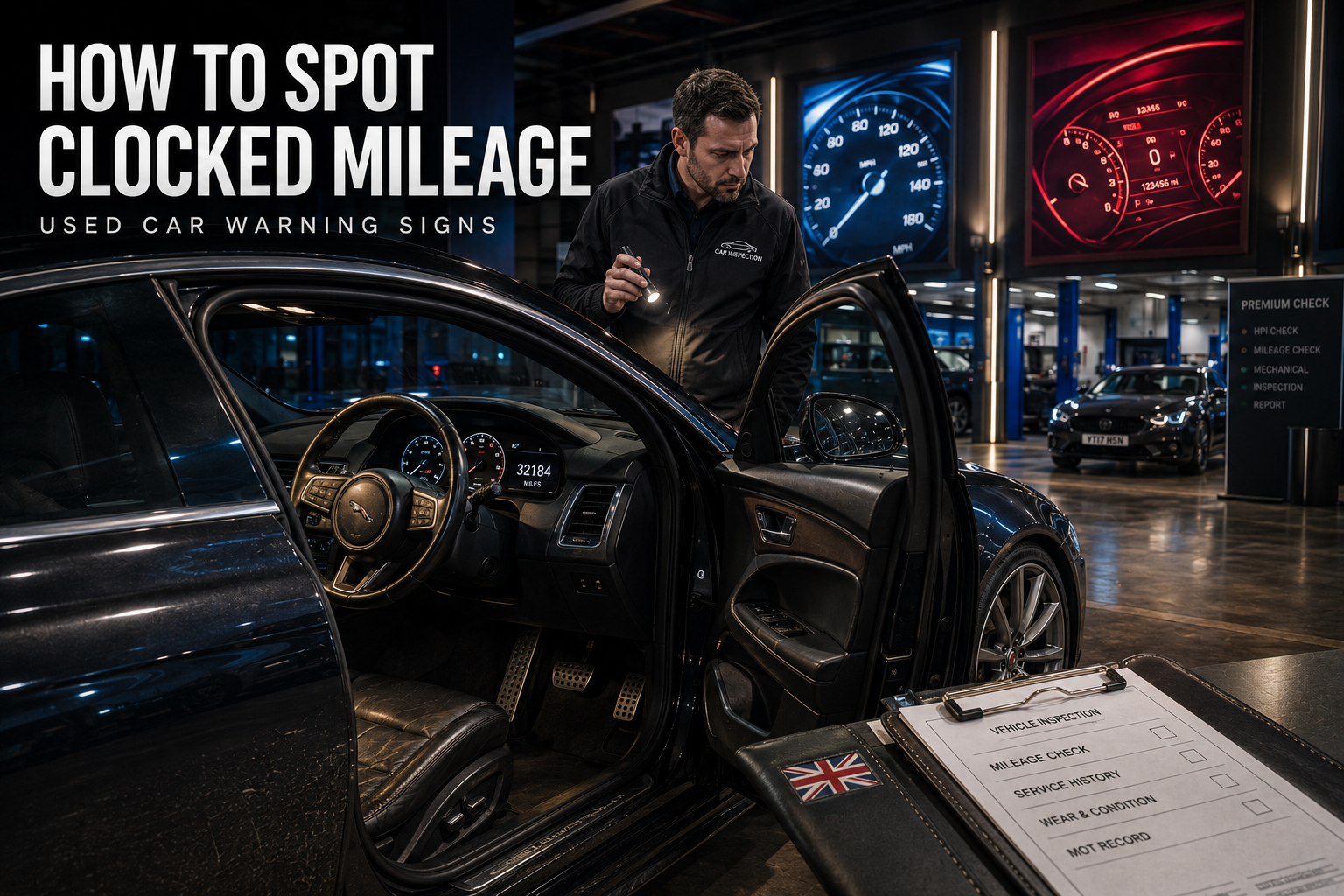
How to Spot Clocked Mileage on a Used Car | TopSellUKCars
Clocking a car means illegally altering the odometer so it shows fewer miles than the vehicle has actually travelled. You can spot it by comparing the mileage shown on the dashboard with the car’s MOT history, service records and physical wear. If the numbers don’t line up across two or more independent sources, treat the car as suspect and walk away.
What Does “Clocked Mileage” Actually Mean in the UK?
In the UK, a “clocked” car is one whose odometer has been deliberately wound back or digitally altered to make the vehicle look less used than it really is. The term comes from the days of mechanical odometers, when sellers would physically wind the numbers back by hand. Modern digital odometers are no more difficult to tamper with for someone with the right diagnostic equipment, but the principle is exactly the same.
Clocking is fraud. It misrepresents the condition, value and likely remaining life of the vehicle. A car that has covered 140,000 miles but is advertised with 60,000 on the clock may be due for major mechanical work, have hidden wear in the suspension or gearbox, or simply not be worth the asking price. That is why mileage history checks matter as much as checking the bodywork for accident damage.
How to Check a Car’s Mileage History for Free
The most reliable first step is the DVLA’s MOT history service. It is free to use and does not require you to be the registered keeper.
You can check a car’s mileage history for free by entering its registration number into the DVLA’s MOT history service at gov.uk/check-mot-history. The results show the mileage recorded at every MOT test since 2005, along with pass or fail status, advisory notes and the test location.
When you look at the MOT history, watch for any year where the recorded mileage goes backwards, jumps forward unexpectedly, or stays exactly the same for several years while the car is clearly being used. A one-off drop of a few miles could be a simple recording error, but a drop of 10,000 miles between tests is a strong red flag.
Other free or low-cost checks include:
- Old MOT certificates – If the seller has a folder of past certificates, compare the mileage written on each one. They should follow a believable upward path.
- Service history – Main dealer and independent garage invoices almost always record the mileage at the time of work. Stamps without mileage are weaker evidence.
- The V5C logbook – The logbook itself does not usually record current mileage, but previous keeper details and the date of first registration can help you assess whether the car’s age matches the claimed mileage. A 15-year-old car with 30,000 miles is not impossible, but it deserves much closer scrutiny.
For a more complete picture, a paid vehicle history check from HPI, Experian AutoCheck or a similar provider will cross-reference mileage against the National Mileage Register. These checks can also reveal outstanding finance, stolen status, write-off categories and plate changes. HPI is a well-known brand in the UK, but several companies offer similar data.
Physical Signs That a Car May Have Been Clocked
Mileage does not only live in the dashboard. The interior and mechanical components wear down with use, and that wear is difficult to hide completely.
Look at the driver’s seat bolster, the steering wheel rim, the gear knob, the pedal rubbers and the floor mat under the driver’s right heel. On a car with a genuinely low mileage, these areas should look almost new. If the seat is collapsed or the steering wheel is shiny and worn but the odometer says 25,000 miles, something does not add up.
Other physical clues include:
- Stone chips on the bonnet and windscreen pitting – A motorway-used car accumulates small chips and light scratches. A 10-year-old car with 20,000 miles should not look sandblasted at the front.
- Replacement parts that should not have worn out yet – A new clutch, new pedal rubbers, a refurbished steering wheel or a replacement gear knob on a low-mileage car can suggest the original components wore out through high use.
- Service stickers under the bonnet or on the door pillar – Many garages stick a small label with the date and mileage when a cambelt or service is done. If that sticker shows 95,000 miles and the dashboard shows 50,000, that is a clear discrepancy.
- Worn seatbelt webbing and button labels – The driver’s seatbelt and frequently used buttons fade and fray with use. Compare the driver’s side to the passenger side. A large difference in wear between the two is normal to some extent, but excessive wear on the driver’s side against a low odometer reading is suspicious.
Digital Odometer Fraud: How It Happens
Modern cars store mileage in the instrument cluster and sometimes in other control units such as the ECU or body control module. Mileage correction tools and software are legal to own for legitimate purposes, such as replacing a faulty instrument cluster. The illegal part is using them to misrepresent a vehicle for sale.
Digital odometer tampering leaves fewer physical clues than old mechanical winding back, which is why the MOT history comparison is so important. Fraudsters may also replace the whole instrument cluster with a lower-mileage unit from a scrap car. A vehicle history check can sometimes reveal a mileage discrepancy if the car has been through dealer networks, insurance records or the National Mileage Register.
What to Do If You Suspect a Car Is Clocked
If you are viewing a car advertised on TopSellUKCars or any other used car platform, do not hand over a deposit while you still have doubts. Take the registration number and run the MOT history check before you view the car, or do it on your phone at the viewing.
If the checks suggest the mileage has been altered:
- Do not buy the car. A clocked car is unlikely to be a one-off problem, and you may struggle to resell it later.
- Ask the seller for an explanation. Some sellers are genuinely unaware, especially if the car was clocked before they bought it. A defensive or evasive answer is another warning sign.
- Report it. If the seller is a dealer, contact Citizens Advice consumer service on 0808 223 1133 or report the matter to your local Trading Standards office. For private sellers, you can still report suspected fraud to Action Fraud.
- Know your legal rights. The Consumer Rights Act 2015 gives buyers the right to reject a used car from a dealer within 30 days if it is not as described or is of unsatisfactory quality. A clocked odometer is a misdescription. For private sales, your legal protection is weaker, so checking before paying is even more important.
Mileage Check Comparison Table
| Source of mileage | What to check | Red flag |
|---|---|---|
| Dashboard odometer | Current displayed mileage | Digital display shows signs of being changed or reset |
| DVLA MOT history | Mileage at each MOT test since 2005 | Mileage drops, flatlines or jumps erratically |
| Service records and invoices | Mileage recorded at each service or repair | Missing mileage on stamps or gaps of years with no records |
| Physical wear | Seat, steering wheel, pedals, stone chips | Heavy wear that does not match the claimed mileage |
| Paid history check | National Mileage Register and insurer records | Mileage discrepancy flagged against the vehicle’s history |
How Buyers and Sellers Can Protect Themselves
If you are buying, never rely on the dashboard figure alone. Spend five minutes on the free MOT history check before you even arrange a viewing. Ask the seller for the V5C and any service history, and compare the mileage in all of them. A genuine seller will not object to you checking these things.
If you are selling a car, keep every service invoice and MOT certificate. A complete history with consistent mileage is one of the strongest trust signals you can give a buyer. If you bought the car second-hand and later discover it may have been clocked before you owned it, be honest about it. Trying to pass the problem on could leave you dealing with a misrepresentation claim.
Clocking is one of the most common hidden problems in the UK used car market, but it is also one of the easiest to spot when you check the MOT history and compare it with the car’s physical condition. A car is only a good deal if the mileage is real.















Comments
1
[…] The same logic applies to cars. See how to spot clocked mileage on a used car. […]