Common Motorbike Scams in the UK and How to Spot Them
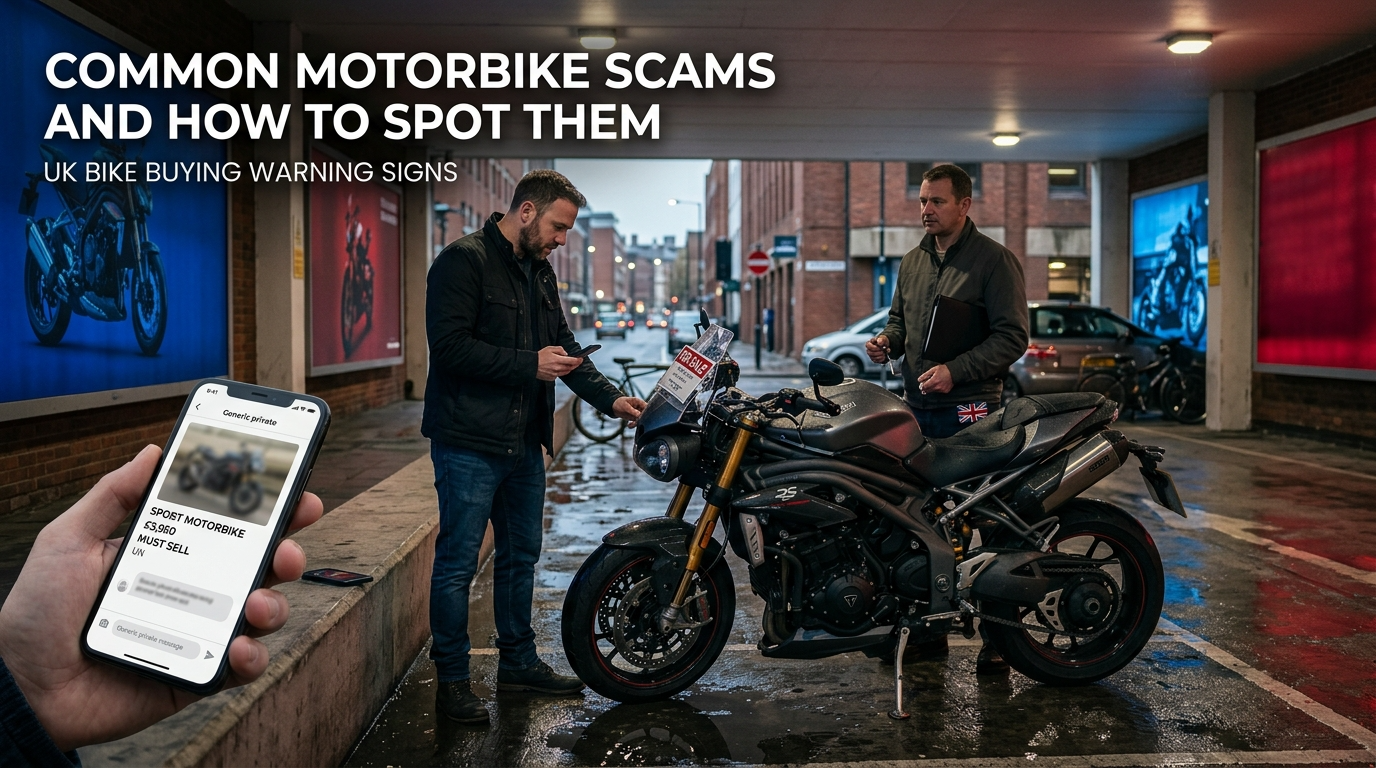
Most motorbike scams in the UK are variations on a handful of tricks: phantom listings used to collect deposits, cloned or stolen bikes sold with someone else’s paperwork, hidden outstanding finance, and payment fraud aimed at sellers. The best protection is to check the frame and engine number against the V5C, run a motorbike history check before you travel or hand over money, and refuse any deal where you cannot physically inspect the bike and its documents.
That may sound straightforward, but scammers are good at making the deal feel urgent. They rely on buyers wanting to secure a cheap bike before someone else does, or sellers wanting a fast sale. This guide explains the most common scams, how to spot them, and what to check before you pay.
The most common motorbike buying scams in the UK
Whether you are answering an advert on TopSellUKCars, Gumtree, Facebook Marketplace or eBay, the checks are yours to make. The platform is not running a history check or inspecting the bike for you.
1. The phantom listing: no bike, just a deposit request
This is one of the most common motorbike scams in the UK. A scammer copies photos from a real advert or social media and lists a desirable bike below market price. Popular targets include bikes like the Yamaha MT-07, Honda CBR or BMW GS range because they attract quick interest.
When you message, the seller says there is huge interest and asks for a deposit of £100 to £500 via bank transfer or PayPal Friends & Family to hold the bike. After the money is sent, the seller disappears.
Red flags include a price that is far below market value for the age and mileage, a seller who will not speak on the phone or do a live video, and a refusal to show the bike in person. If a seller cannot provide a specific photo — for example, the VIN plate with today’s date written on a piece of paper — walk away.
Never pay a deposit before viewing a motorbike. A genuine seller will not object to you seeing the bike first.
2. The cloned or stolen motorbike: clean paperwork on a stolen machine
Cloning is the motorbike equivalent of identity theft. A thief steals a bike, then fits it with number plates and a VIN from a legitimate bike of the same make, model and colour. Sometimes they use a V5C from a bike that has been scrapped or written off. The advert may look completely normal, and the registration may even show as taxed and MOT’d on GOV.UK.
The problem is that the machine in front of you is not the bike those documents belong to. If you buy it, the police can seize it, and you lose both the bike and the money you paid.
You can spot a cloned bike by checking the VIN yourself. On most motorbikes, the VIN is stamped into the right side of the headstock or frame. Compare it against the V5C. Look for fresh paint around the VIN, new rivets, grinding marks, or a plate that does not look factory fitted. Check the engine number too. If it is missing, unreadable or does not match the V5C, stop the sale.
A seller who refuses to let you check the VIN or engine number is giving you a reason to leave. Run a history check using the VIN as well as the registration number, because a cloned bike may have a clean number plate but a stolen frame.
Our guide to common used car scams covers similar tricks on four wheels.
3. The “overseas seller” or “delivery agent” advance-fee scam
In this scam, the seller claims to be working abroad, serving in the forces, or otherwise unable to meet. The bike is supposedly held by a shipping company or a friend in another city. You are asked to pay a deposit or the full amount, after which the bike will be delivered.
Once you pay, the buyer disappears and no bike arrives. Some scammers send fake courier invoices or use fake shipping websites to make the story look real.
The answer is simple: do not pay for a motorbike you have not seen. UK vehicle sales do not require you to use a seller’s chosen courier or payment service. If the bike is in Glasgow and you are in London, either travel to view it or walk away.
A motorbike can be on hire purchase, a personal loan, or a PCP deal. Until the finance is cleared, the finance company owns the bike or has a claim over it. If you buy it privately without clearing that finance, the lender can repossess it from you.
A history check from a provider such as HPI Check, Vcheck or MotorCheck should reveal outstanding finance. Do not rely on a printout the seller gives you, because these can be faked. Run the check yourself before you commit.
If the check flags outstanding finance, the safest route is to contact the lender before paying. You can pay the finance company directly and pay any remaining balance to the seller, with a written settlement letter. Avoid private arrangements where you pay the seller and they promise to settle the finance later.
For more on what a history check covers, read what an HPI check is and why UK buyers should never skip one.
5. Clocked mileage
Motorbike odometers can be altered, and because many bikes cover low annual mileage, a heavily clocked bike can still look plausible. A 2016 bike showing 4,000 miles may be genuine or may have had 30,000 miles wound back.
The easiest way to check is through the GOV.UK MOT history service. Enter the registration number and look at the recorded mileage at each MOT test. Unexplained drops, long gaps, or readings that do not increase year on year are red flags.
Also compare the mileage with the bike’s physical condition. A low-mileage bike should not have heavily worn footpegs, brake discs, grips, chain or sprockets. If the mileage looks too clean but the bike looks tired, treat it as clocked until proven otherwise.
The same logic applies to cars. See how to spot clocked mileage on a used car.
6. Payment scams when you’re selling
Sellers get targeted too. A buyer may offer the full asking price without viewing, then send a fake bank transfer confirmation or a fake PayPal email. Some buyers “accidentally” overpay and ask for the difference back before the original payment clears. The original payment never arrives, and you are left out of pocket.
Never trust a screenshot of a payment. Wait until the money has actually cleared in your bank account. For high-value bikes, meet at your bank and pay cash in over the counter, or use a same-day faster payment and confirm with your bank before handing over the keys.
Avoid PayPal Friends & Family for vehicle sales. It is designed for sending money to people you know, not for buying goods, and it removes buyer protection.
7. Fake escrow and courier websites
A scammer may send you a link to a website that looks like an official payment or escrow service. It might mimic eBay Motors, Shpock, or a shipping company. You enter your card details or transfer money, and the site disappears with your cash.
Do not click payment links sent by strangers in messages. If you want to use a payment service, go to the official website yourself. Be particularly wary of any seller or buyer who insists you use a specific escrow site, especially if they are the ones who sent you the link.
How to spot a fake motorbike listing before you travel
Most fake listings give themselves away before you leave the house. Use this comparison when you read an advert.
| Signal | Genuine seller | Scam listing |
|---|---|---|
| Price | Close to market value for age and mileage | Far below market value with no clear reason |
| Viewing | Happy for you to inspect the bike | Avoids meeting, pushes delivery or payment |
| V5C | Present, with name and address matching seller | Lost, or “will post later” |
| Photos | Current, specific, can provide more on request | Stolen, blurry, or repeated from another advert |
| Deposit | No deposit needed to view | Demands a deposit to hold or secure delivery |
| Communication | Phone call or video possible | WhatsApp or email only, constantly avoids a call |
| Location | Fixed address or clear meeting place | Vague, overseas, or storage unit in another city |
If a listing shows several of the right-hand column signs, it is not worth your time.
A 10-point motorbike viewing checklist
When you do view a bike, go through these checks before discussing payment. If the seller rushes you or objects to any of them, leave.
- Check the seller’s ID against the V5C. The name and address should match. If the seller is not the registered keeper, ask why.
- Check the VIN on the headstock. It must match the V5C exactly, with no signs of grinding, welding or fresh paint.
- Check the engine number. Compare it with the V5C and any service history. If it is missing or unreadable, stop.
- Check the registration plate. Run the plate through the GOV.UK MOT history service and confirm the bike’s colour, engine size and MOT expiry match the advert.
- Run a history check yourself. Do not rely on a seller’s printout. You need to know if the bike is recorded stolen, written off or has outstanding finance.
- Look at the locks and ignition. Forced marks, a replacement ignition barrel, or a single non-original key can indicate theft.
- Check the mileage against MOT history. Unexplained drops or inconsistent readings are a red flag for clocking.
- Check wear and tear. Extremely low mileage should be reflected in original grips, footpegs, discs and chain.
- Take a test ride only with insurance and agreed terms. Make sure you are insured to ride the bike, and agree what happens if the bike is damaged.
- Trust your instinct. If the seller is pushing for a fast decision, changes the story, or cannot answer basic questions about the bike’s history, leave.
What paperwork must match before you pay
The V5C logbook is the most important document, but it is not proof of ownership. It shows the registered keeper, not necessarily the legal owner. A bike can be on finance or stolen and still have a V5C in someone’s name.
Before you pay, check the following:
- The V5C shows the seller’s name and address. If the seller is not the registered keeper, ask for proof that they have the right to sell the bike.
- The VIN and engine number on the bike match the V5C exactly.
- The MOT status and history match the bike. Most motorbikes need an MOT from the third anniversary of first registration.
- The seller has service history and receipts, especially if the mileage is low.
- If the V5C is lost, the seller orders a replacement from the DVLA before the sale. A missing logbook is a common excuse used by sellers of stolen bikes.
Remember that VED, often called road tax, does not transfer with the bike. The seller’s tax will be refunded when they notify the DVLA, and you must tax the bike in your own name before riding it on the road.
For a full list of paperwork if you are selling, see what documents do you need to sell a car privately in the UK.
What to do if you think you’ve been scammed
If you have already sent money, act quickly.
- Contact your bank immediately. Ask for the fraud department. The sooner you report it, the better the chance of recovering your money.
- Report to Action Fraud. You can report online at actionfraud.police.uk or call 0300 123 2040. Action Fraud is the UK’s national fraud and cybercrime reporting centre.
- Report a stolen or cloned bike to the police. Call 101 and provide the VIN, registration number, seller details and any advert screenshots.
- Keep everything. Save every message, screenshot, receipt and bank detail. Do not delete anything.
- If you are selling and receive a fake payment, do not refund any overpayment and stop contact with the buyer.
Quick summary
Almost every motorbike scam in the UK works because the scammer creates urgency and distance. They want payment before you have verified the bike, the paperwork, or the person. If a bike cannot be viewed, has a missing or mismatched V5C, or the seller demands a deposit before you arrive, those are strong enough reasons to walk away. A genuine seller will not object to a VIN check, an MOT history check, or a meeting in person.
You can find more buying and selling guides on the TopSellUKCars blog.