Private Sale vs Dealer: Where Should You Buy a Used Car in the UK?
Private Sale vs Dealer: Where Should You Buy a Used Car in the UK?
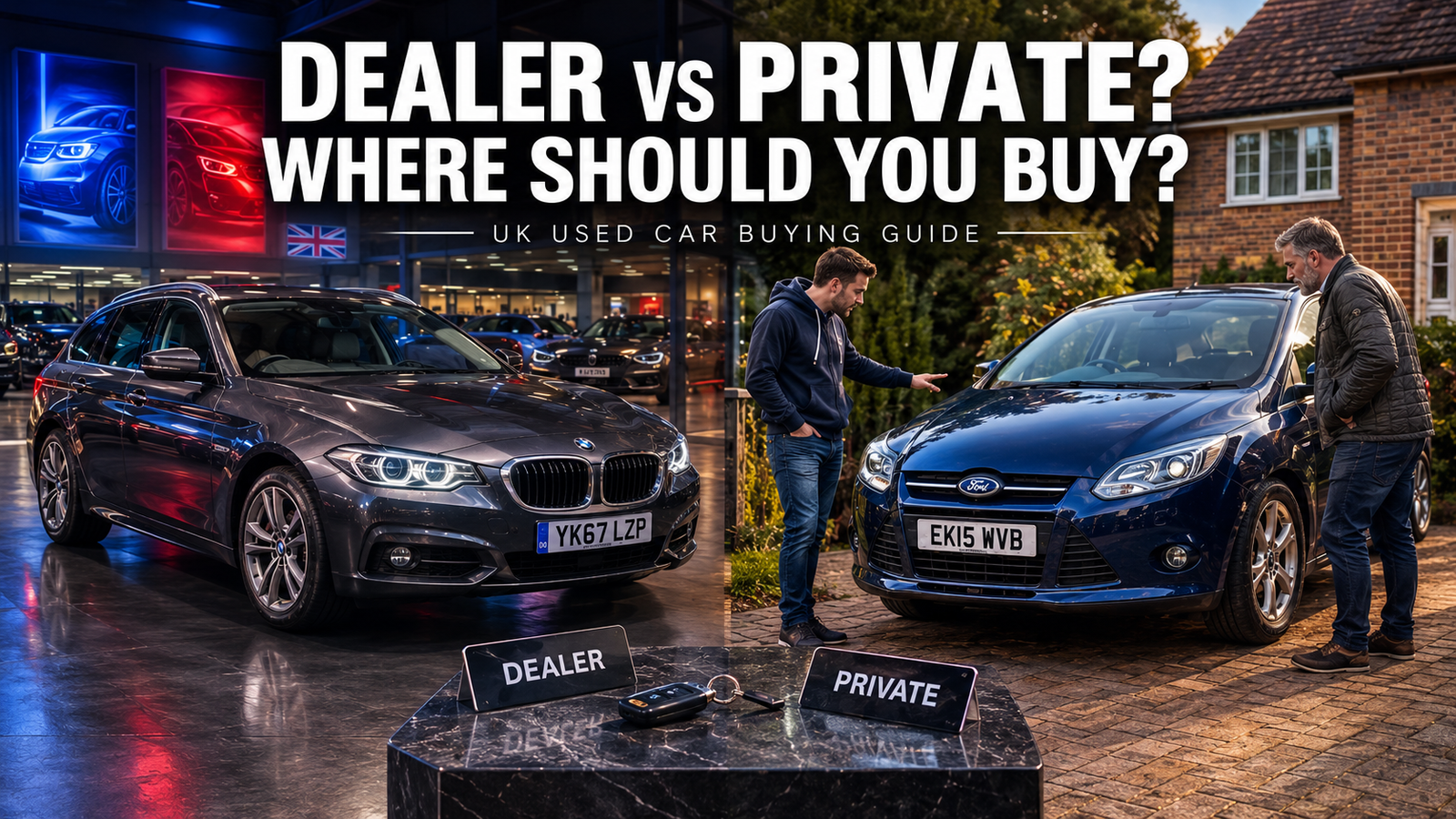
If you want maximum legal protection and a simpler buying process, a reputable used car dealer is the safer bet. If your priority is getting the lowest possible purchase price and you are confident in your mechanical knowledge, a private sale usually offers better value. Both routes are legitimate, but they carry very different levels of risk and responsibility for you as the buyer.
What Are the Legal Differences Between a Dealer and a Private Seller?
This is the single most important distinction to understand before you spend a penny.
When you buy from a dealer, you are protected by the Consumer Rights Act 2015. This law states that the car must be of satisfactory quality, fit for purpose, and as described. If the car develops a serious fault within the first 30 days, you have the right to reject it for a full refund. After 30 days but within six months, the dealer must be given one opportunity to repair or replace the car before you can pursue a refund.
When you buy from a private seller, you have almost no statutory protection regarding the condition of the vehicle. The only legal requirements are that the seller must be legally entitled to sell the car (they must own it) and that the description of the car must be accurate. If you buy a car privately and the engine blows up on the drive home, that is generally considered “buyer beware”—you have no automatic right to a refund or repair.
This legal gap is the main reason dealers charge higher prices than private sellers. You are paying a premium for recourse if things go wrong.
Price Comparison: How Much Do You Actually Save Going Private?
It is tempting to look at classifieds and assume private sellers are always cheaper. Often, they are, but the gap is not as wide as it once was.
A dealer’s price includes overheads: business premises, staff wages, VAT on their profit margin (under the Margin Scheme), and the cost of preparing the car for sale. Dealers also often include a warranty in the sticker price. A private seller has none of these costs.
However, the private price reflects the risk. If a private car is significantly cheaper than an equivalent dealer car, there is usually a reason. It might be a genuinely good deal from a seller who needs a quick sale, or it might be a car with a hidden history that a dealer would be legally unable to sell without rectifying.
As a rule of thumb, you should expect a private sale to be roughly 10% to 20% cheaper than a dealer forecourt price for a similar mileage and spec. If the price difference is more than that, be suspicious of the vehicle’s history.
Pros and Cons of Buying From a Dealer
Here is a breakdown of what you get when you buy from a used car forecourt.
| Pros | Cons |
|---|---|
| Legal protection under the Consumer Rights Act 2015. | Higher sticker prices than private sales. |
| Warranty included (typically 3 to 12 months). | Sales pressure can feel uncomfortable for some buyers. |
| Vehicle preparation (cleaning, servicing, fresh MOT often included). | Part-exchange values are often lower than selling privately. |
| Recourse via The Motor Ombudsman if the dealer is accredited. | Harder to gauge how the previous owner treated the car. |
| Finance options and debit/credit card payments accepted. | Not all dealers are honest—you still need to do due diligence. |
Dealers are the right choice if you need a car quickly, you aren’t mechanically confident, or you need to finance the purchase or use a credit card for Section 75 protection.
Pros and Cons of Buying From a Private Seller
Private sales dominate the lower end of the market.
| Pros | Cons |
|---|---|
| Lower purchase price —usually the cheapest way to buy. | No legal warranty or “satisfactory quality” requirement. |
| Direct history—you can ask the owner exactly how it was driven and maintained. | Risk of clocking, cloning, or hidden damage is higher if unchecked. |
| No sales pitch—less pressure than a forecourt. | You must handle all paperwork, payment, and tax transfer yourself. |
| No VAT or dealer margins added to the price. | You have limited recourse if the car is stolen or has outstanding finance. |
Private buying suits cash buyers who know their way around a vehicle or are prepared to pay for an independent inspection.
What Checks Should You Do Before Buying Privately?
If you go down the private route, you must act as your own dealer. You cannot assume the seller is being honest.
Before you even view the car, ask for the registration number and run an HPI Check. This is a specific type of vehicle history check named after Hire Purchase Information. A full check from companies like HPI Check, Experian AutoCheck, or CarVertical will tell you if the car is:
- Recorded as stolen.
- Subject to outstanding finance (meaning the lender still owns it).
- Written off (Category S or N).
- Recorded as having a mileage discrepancy (clocked).
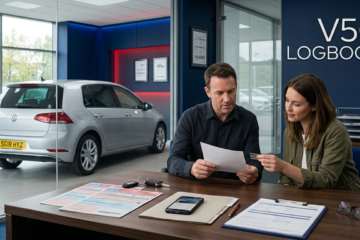
When you view the car, ensure the V5C logbook (issued by the DVLA) matches the seller’s name and address. Look for a watermark on the document and check the serial number isn’t from a stolen batch—if a seller only has a photocopy, walk away.
You should also check the MOT history on the DVLA website. This is free and shows every MOT test the car has had, including advisories and failures. If the car has just passed an MOT with a “clean sheet” after years of failing on corrosion, be cautious.
What Questions Should You Ask a Private Seller?
The way a seller answers questions is often as revealing as the answers themselves.
Ask to see the service history. A full service history (FSH) backed by receipts is worth more than a stamped book with no paperwork. Ask why they are selling. If the answer is vague or changes between your phone call and the viewing, be wary. Ask if the car has ever been in an accident or had any paintwork. Crucially, ask to see the V5C logbook and ask if they are the registered keeper. Never buy a car from someone who is not the named keeper on the V5C unless they can prove they are a trader.
Should You Pay for an Independent Vehicle Inspection?
If you are spending more than £5,000 on a private sale, paying for a pre-purchase inspection is rarely a waste of money.
The AA and RAC both offer vehicle inspection services where a qualified engineer visits the car, checks the mechanical condition, and produces a report. The cost is usually between £150 and £250. This is significantly cheaper than finding out you bought a car with a blown head gasket or a twisted chassis. Sellers who refuse to allow an independent inspection are usually hiding something.
How Does Paying for the Car Differ?
The payment method is a major security difference.
Dealers almost always accept bank transfers, debit cards, and sometimes credit cards. Paying any amount on a credit card gives you Section 75 protection under the Consumer Credit Act, meaning the card provider is jointly liable if the dealer breaches the contract. This is a massive safety net.
Private sellers should only be paid by bank transfer (Faster Payments) or cash for low-value vehicles. Never pay a deposit to a private seller via PayPal “Friends and Family” or a money transfer service like Western Union; these offer zero protection. Be wary of any private seller who asks for a large cash deposit to “hold” the car before you have seen it.
What About Vehicle Tax (VED)?
The days of buying a car with “tax included” are long gone.
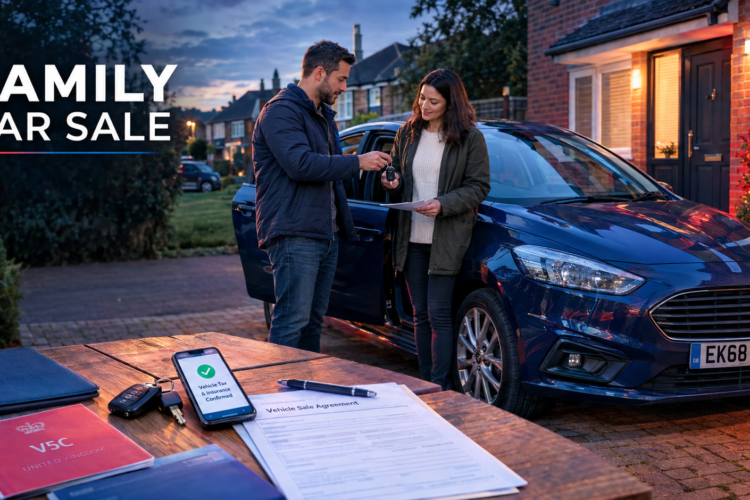
Since the DVLA abolished the paper tax disc, Vehicle Excise Duty (VED) does not transfer with the vehicle. The moment a private seller sells the car, they must notify the DVLA (usually online), and they will automatically receive a refund for any full months remaining. The buyer must tax the vehicle before driving it away. You can do this online using the 12-digit reference number on the green “New Keeper” slip (V5C/2) from the logbook.
Dealers often tax the car for you as part of the handover process. If you buy privately, do not drive the car home untaxed—the DVLA’s automatic number plate recognition (ANPR) cameras will flag you instantly, and you risk a fine of £80 or more.
Summary: Which Route Should You Choose?
Choose a dealer if you value peace of mind, need finance, or want to be able to complain to someone if the car breaks down a month later. The higher price is the cost of safety.
Choose a private seller if you are buying a cheaper car, you understand the mechanical risks, and you are willing to spend time checking the car’s history, MOT records, and paperwork yourself. The saving is real, but only if you avoid buying a lemon.







Comments
1
[…] Private sales are usually cheaper, but they are largely sold as seen. The same checks still apply, and they matter even more because there is no dealer to put things right afterwards. Read our comparison of private sale vs dealer when buying a used vehicle in the UK. […]